The National Museum is a place where we stand before a painting and wait for something to happen. Usually nothing does – because no one teaches us that we are the ones who have to take the first step. The hAIku.art.pl application is an invitation to take that step. And proof that artificial intelligence – properly used – can be a bridge between a work and its audience, not a barrier.
About the hAIku project
The project was created in collaboration with the educators of the National Museum in Warsaw as a pilot educational initiative that teaches both attentive looking at art and creative dialogue between human beings and artificial intelligence.
A taboo that had to be broken
Let us be frank: AI in cultural institutions is a subject that meets with resistance. Rightly so – because most applications to date have been either trivial (chatbots on museum websites) or controversial (generating “art” out of nothing). hAIku.art.pl deliberately steers clear of both scenarios.
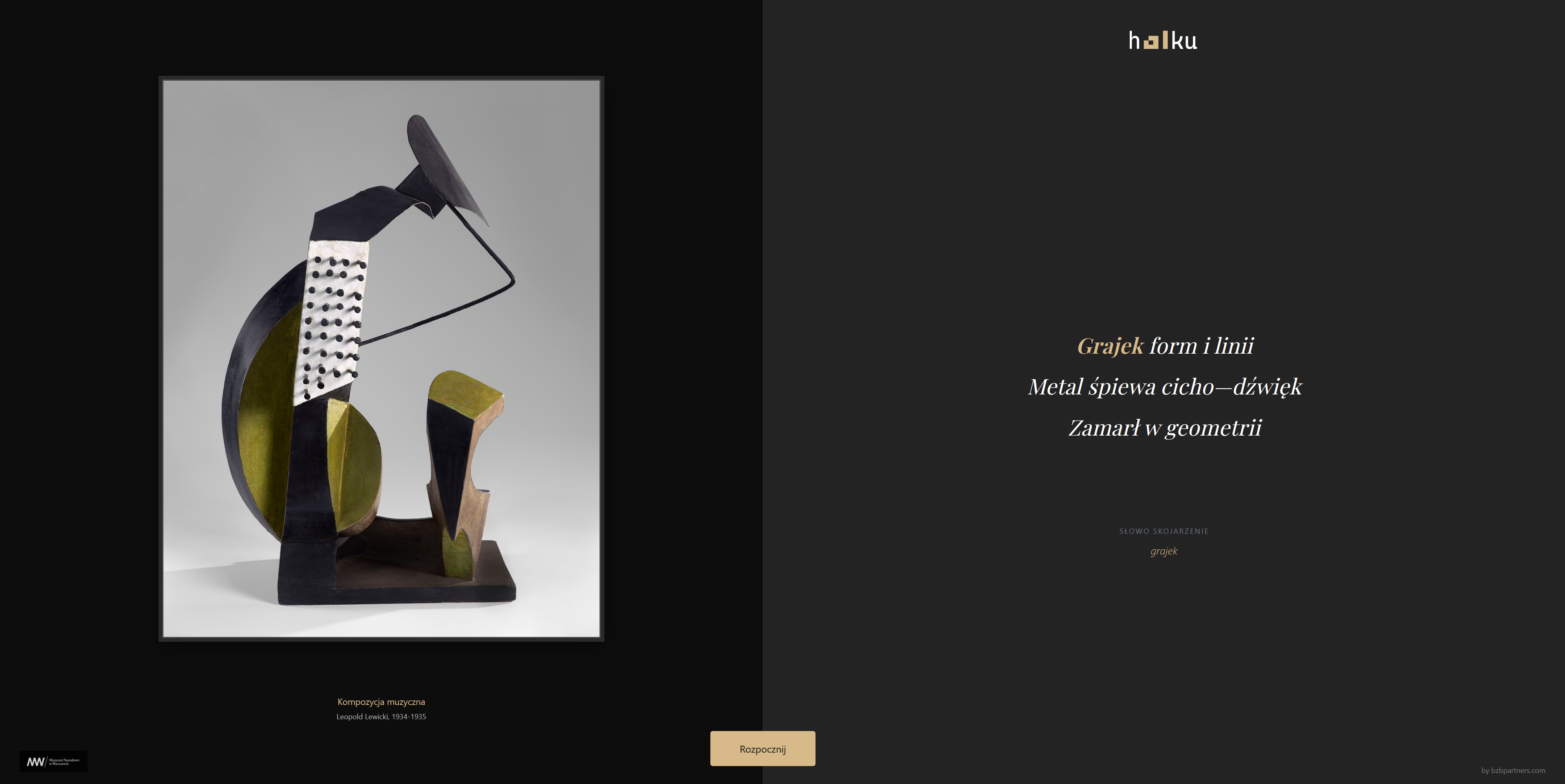
Here, AI does not replace the artist – because the work already exists, painted or carved by a human hand. Nor does AI replace the guide – because it does not explain, describe or judge. It plays a role no other tool can: it turns the visitor's fleeting, unnamed feeling into a literary form that can be experienced at home as well.
For the museum team this was a conscious decision – to show that AI in culture can be more than a gadget. That it can serve sensitivity rather than replace it. And that a museum has the right – perhaps even the duty – to be a place where new technologies are tested with courage, but also with responsibility.
The most interesting part of the whole project is the part you cannot see: the moment when someone stands before a canvas searching for the right word. That is the moment the work begins to work.
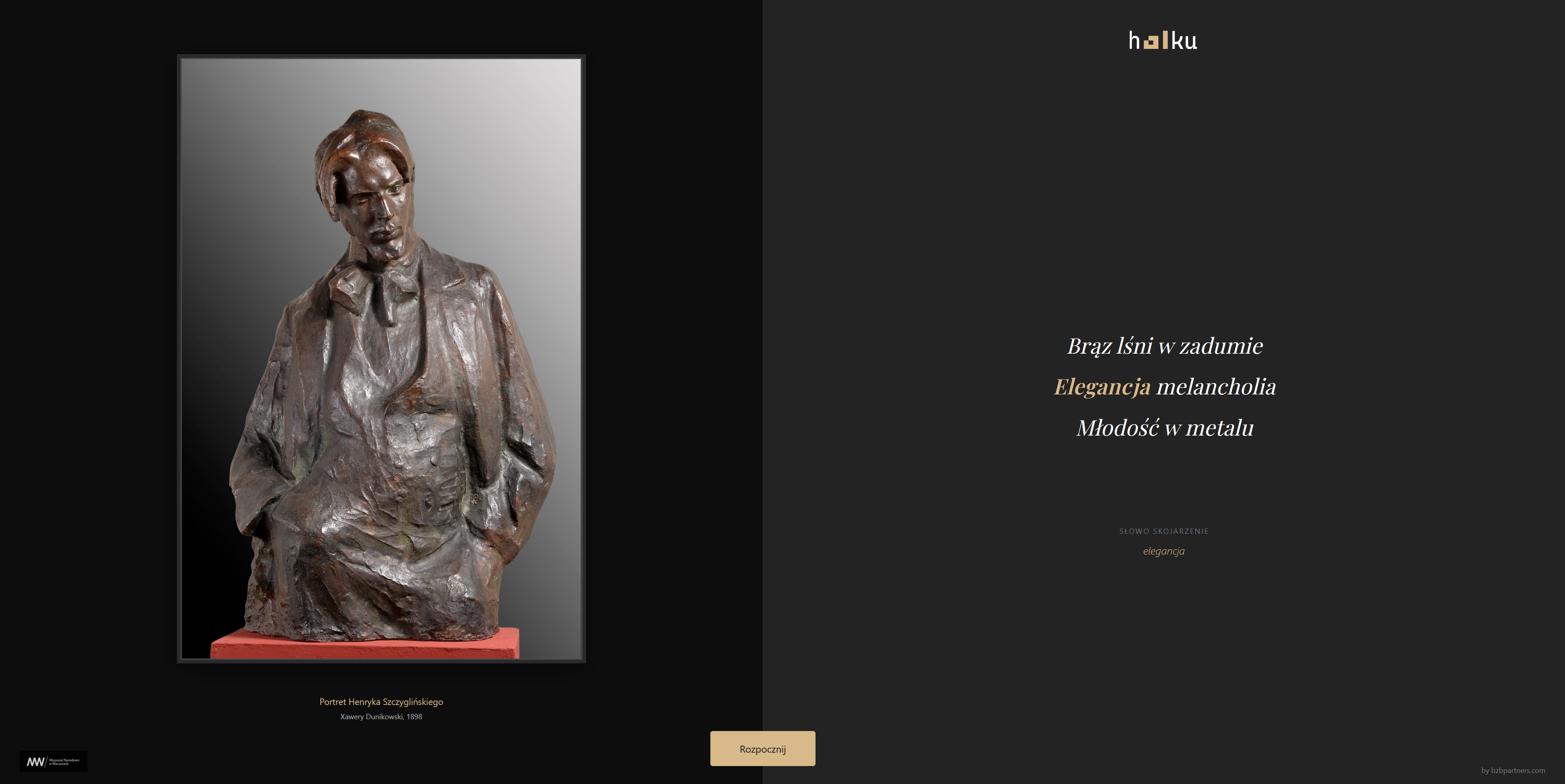
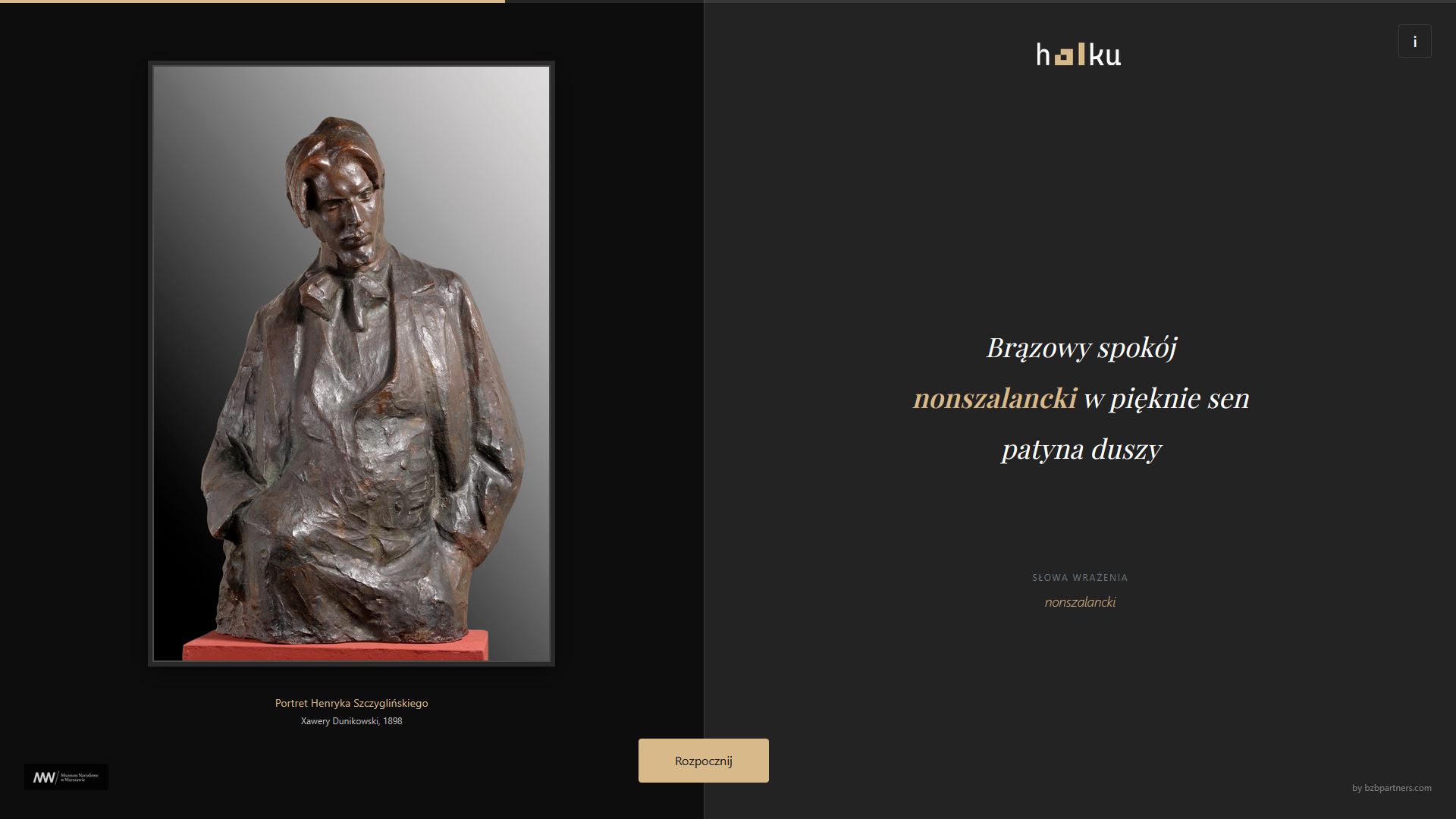
The educators know best
The project was not born in a technological vacuum. From day one we worked shoulder to shoulder with the National Museum's team of educators – people who watch every day how visitors respond to art, what engages them and what holds them back.
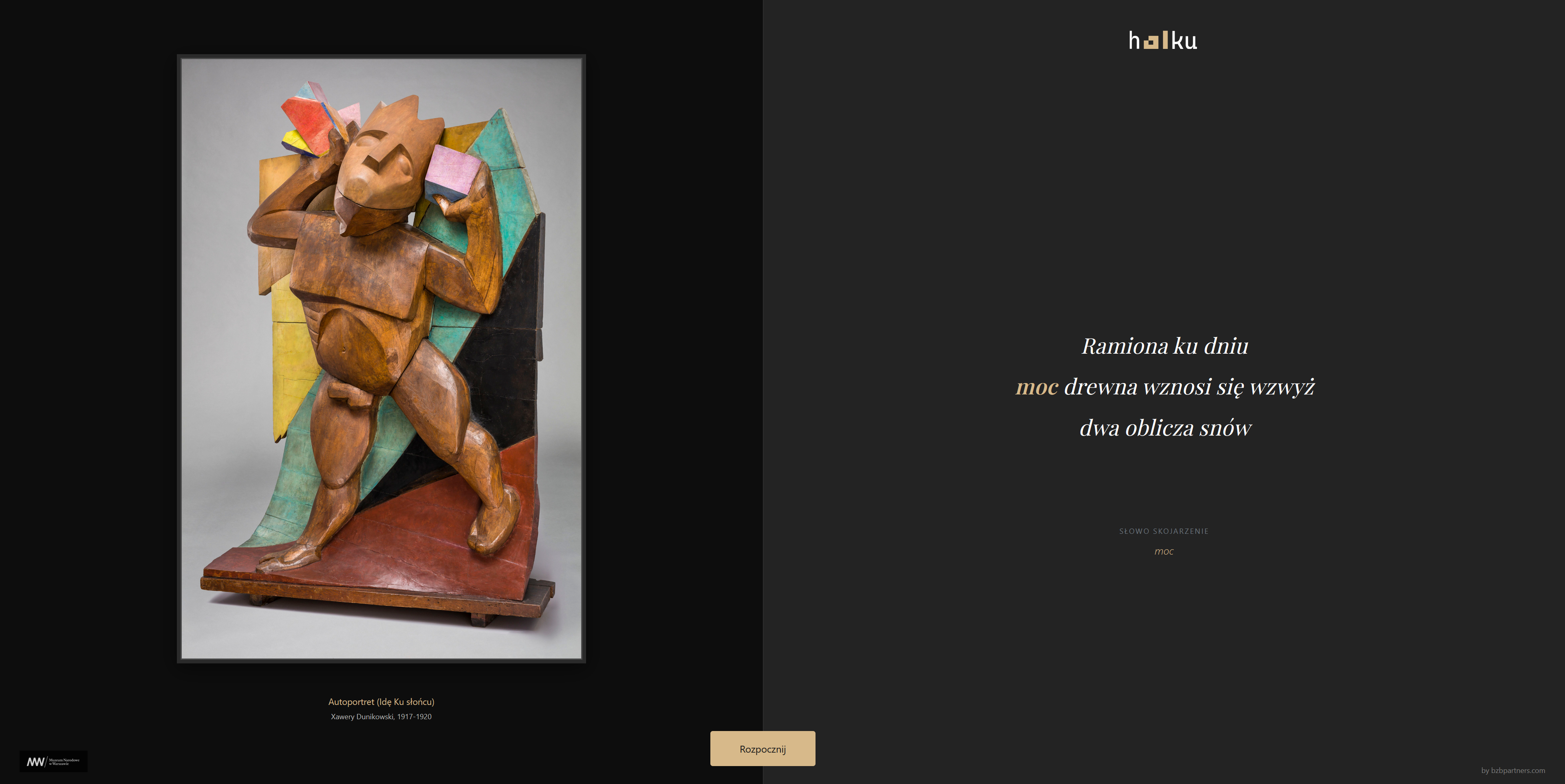
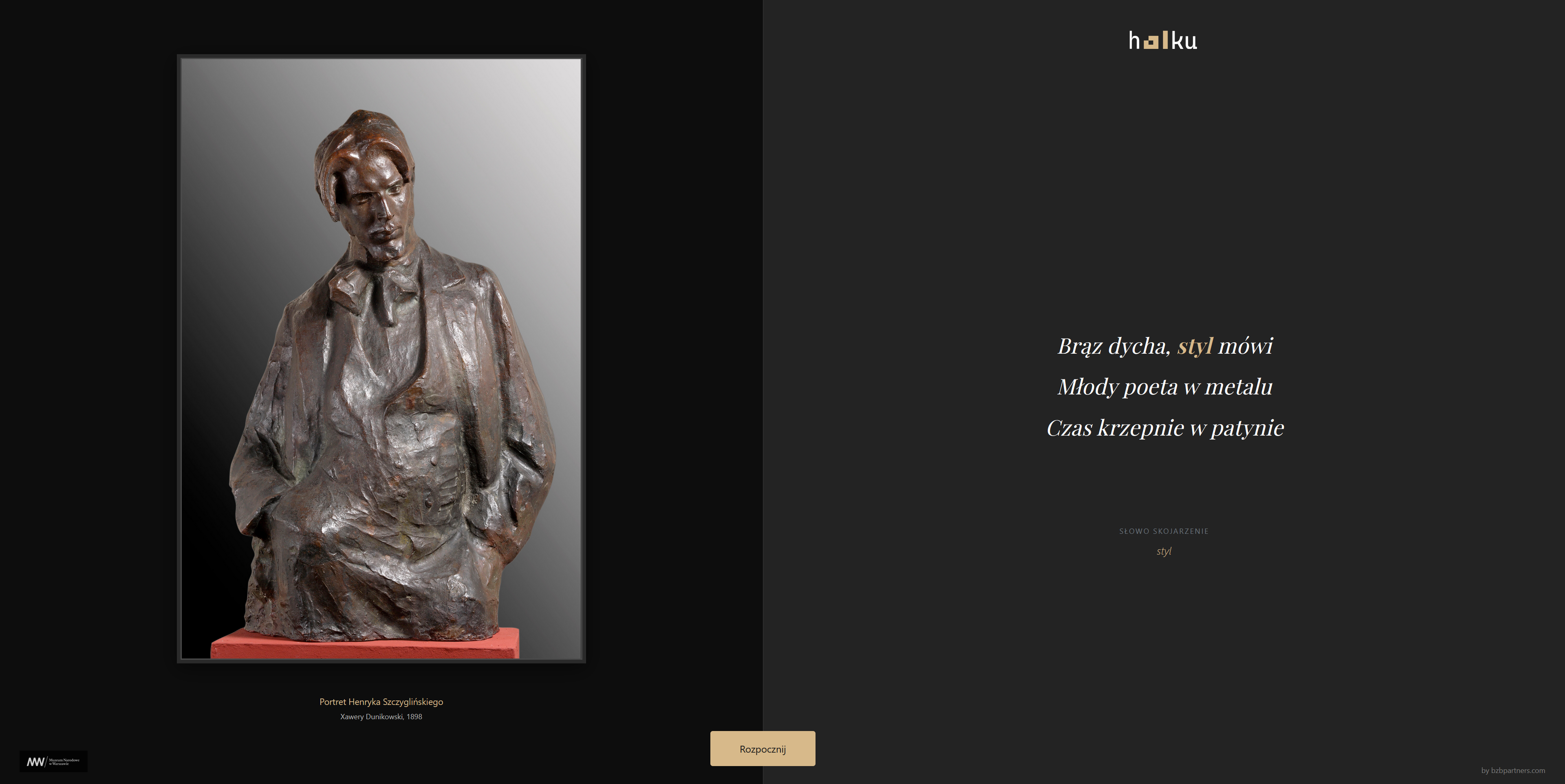
The educators set one condition: the application must not explain the work. It must not suggest the “correct” interpretation. It is to be a mirror – giving visitors back their own reaction in a form that surprises and stays in the memory. Haiku turned out to be the ideal format: short enough not to overwhelm, poetic enough to move.
Context engineering, or the art of curation
Anyone who has tried to generate poetry with AI knows that the result tends to be – to put it gently – banal. Generic prompts produce generic results. That is why the heart of haiku.art.pl is not the language model itself but what we feed it: a carefully constructed context.
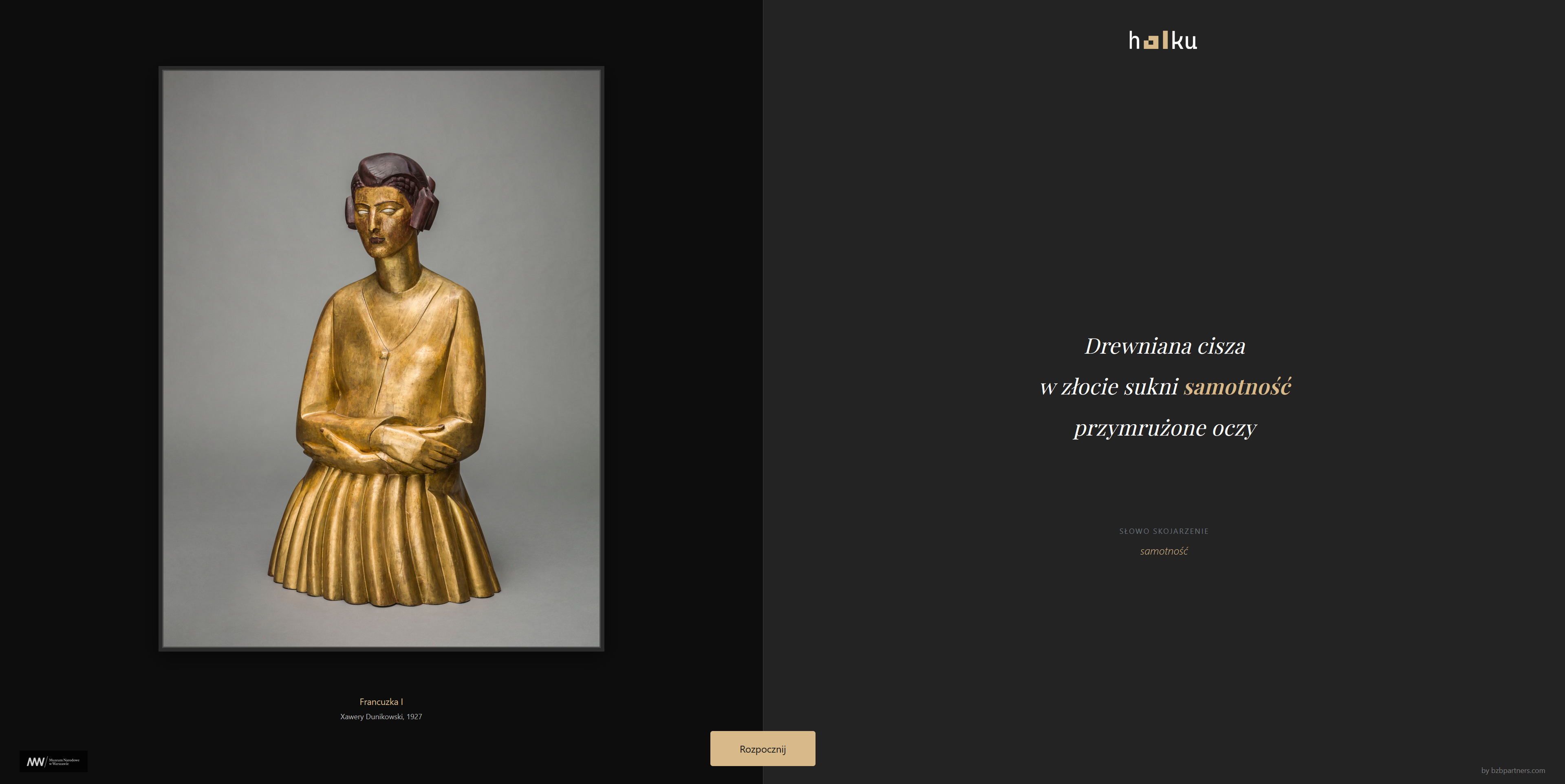
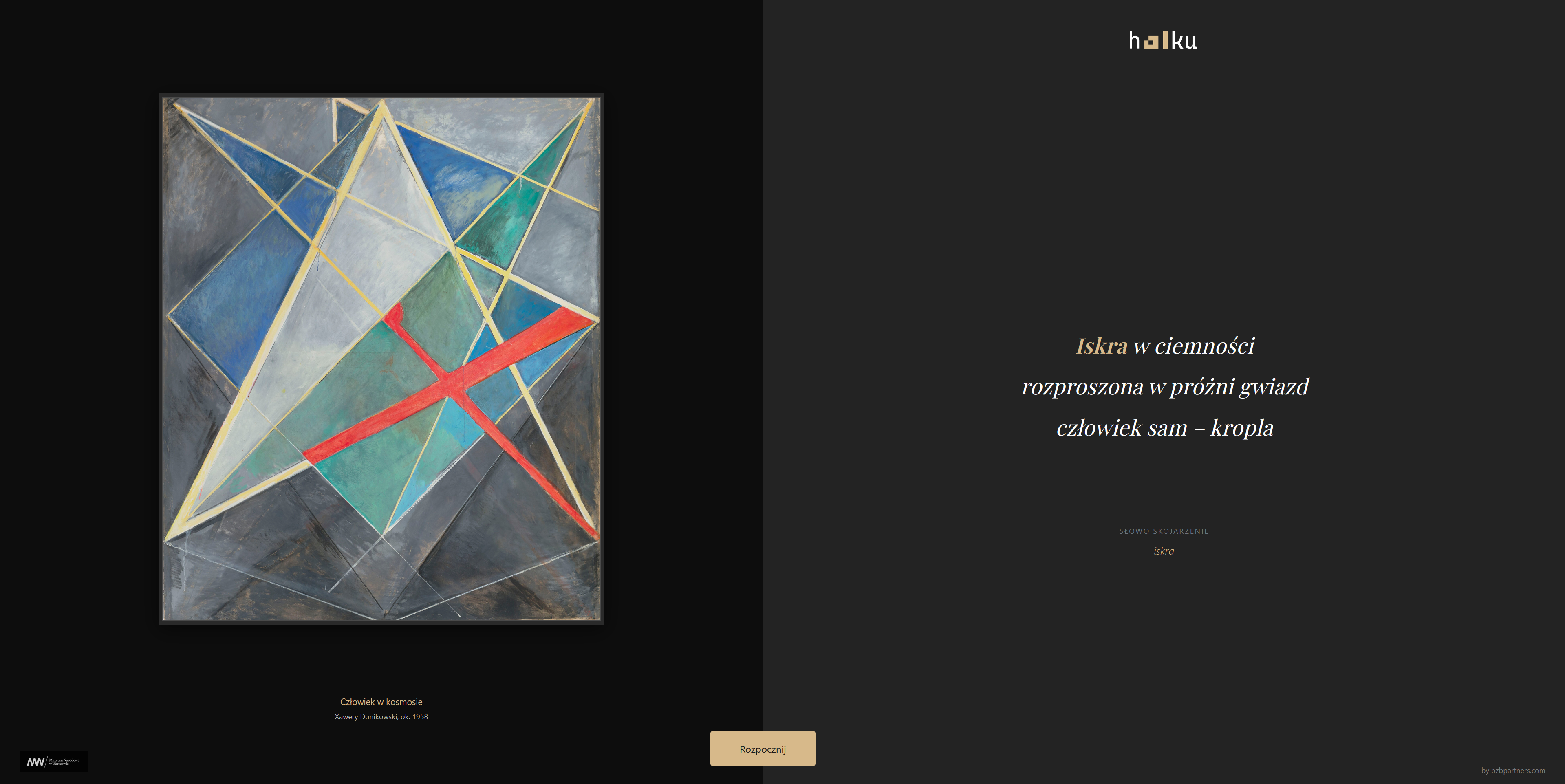
For every work from the museum's collection we prepared a layer of context: period, technique, mood, symbolism, historical background, but also – and this matters just as much – what the work does not show. Empty spaces, silences, tensions. That is often where the best association is born.
Context engineering is not prompt engineering. It is the design of the entire environment in which the AI operates – from the input data, through the formal constraints, to tone and sensitivity. It is the difference between tossing a robot a keyword and leading it through the museum's galleries.
We iterated for weeks. Every haiku was assessed by the educators – not for linguistic correctness, but for whether it moved. Whether it surprised. Whether the person reading it would want to go back to the painting and look again. That was our only KPI.
The best technology in a museum is the kind the visitor never notices.
A public stage, hidden protection
The application is public – any visitor can type in their own association right there in front of the painting. Openness needs protection, but protection must not kill expression. So we designed a three-layer moderation system in which each level catches what the previous one cannot see.
The first layer is a dictionary – a fast, uncompromising filter for obvious profanities and abusive words. The second is text normalisation: the system recognises attempts to get round the dictionary by inserting full stops or spaces, swapping letters for digits and other creative workarounds that people devise with surprising ingenuity. The third layer is AI – the same model that generates the poetry assesses the context and intent of the word entered. Is “blood” aggression, or a description of a Beksiński painting? Is “death” a provocation, or a natural response to a still life? Only at this level does the decision cease to be binary.
The hardest part was not blocking what is bad, but allowing what is bold. Art provokes, stirs difficult emotions, works in dark metaphors. Too tight a filter would have turned the application into a generator of greeting-card platitudes. Too loose a one would have let in content that has no place in a museum – a space open to children too. Our system is not censorship. It is curation – applied not to the works on the wall, but to the words that arise in front of them.
Every hAIku generated is unrepeatable – because the association that prompted it is unique. Two people standing before the same painting type in different words and receive different poems. That is not a flaw – it is the essence of the project. Art has no single answer. Neither does hAIku.
What remains
The hAIku.art.pl project showed us something we had not expected at the outset. The greatest success is not the poems it generates – it is the conversations they spark. People going back to the painting. Reading their hAIku aloud. Debating the word they chose. Showing each other their results and asking: “and what comes to mind for you?”
AI in the service of culture, not in its place.
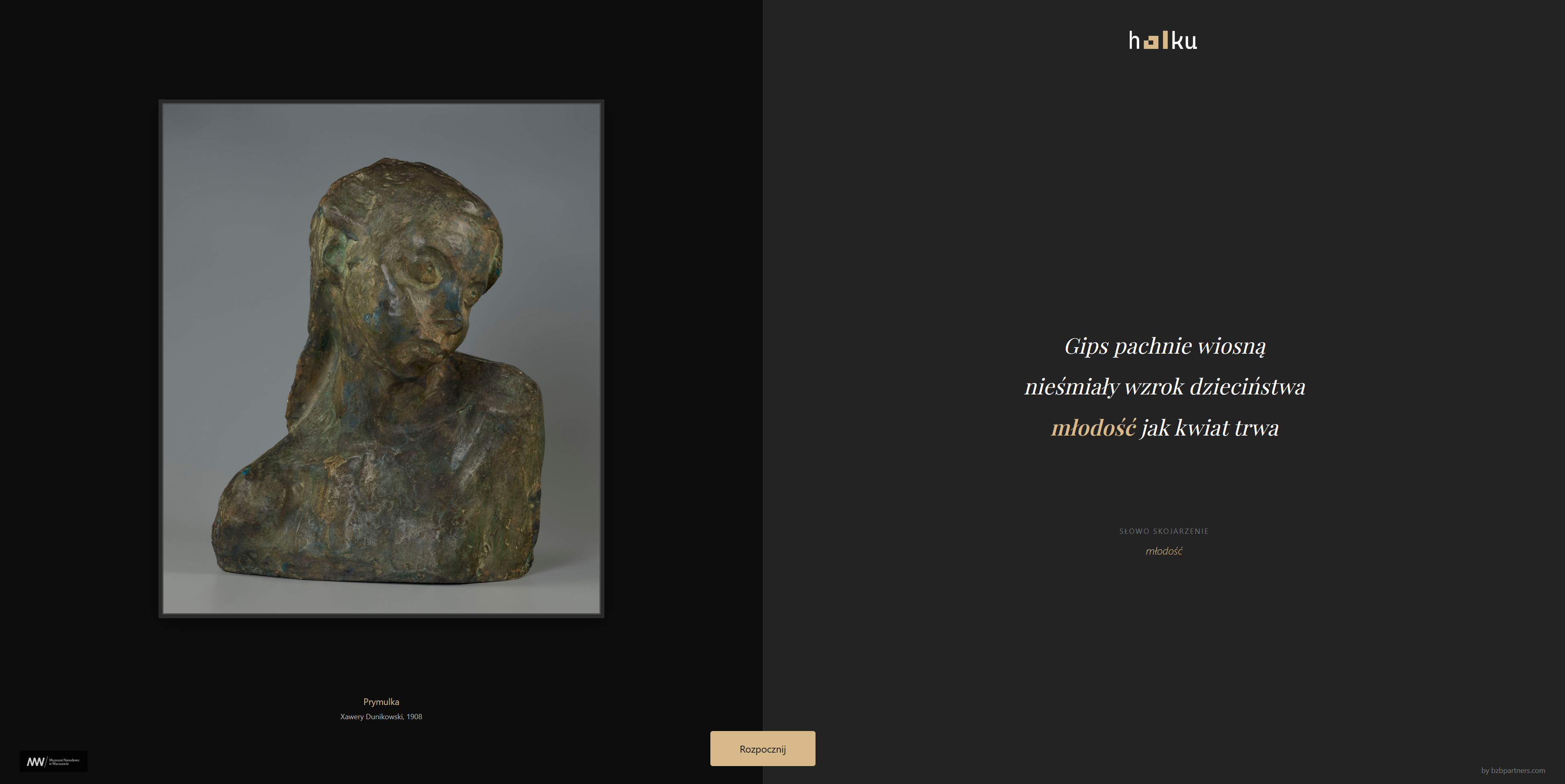
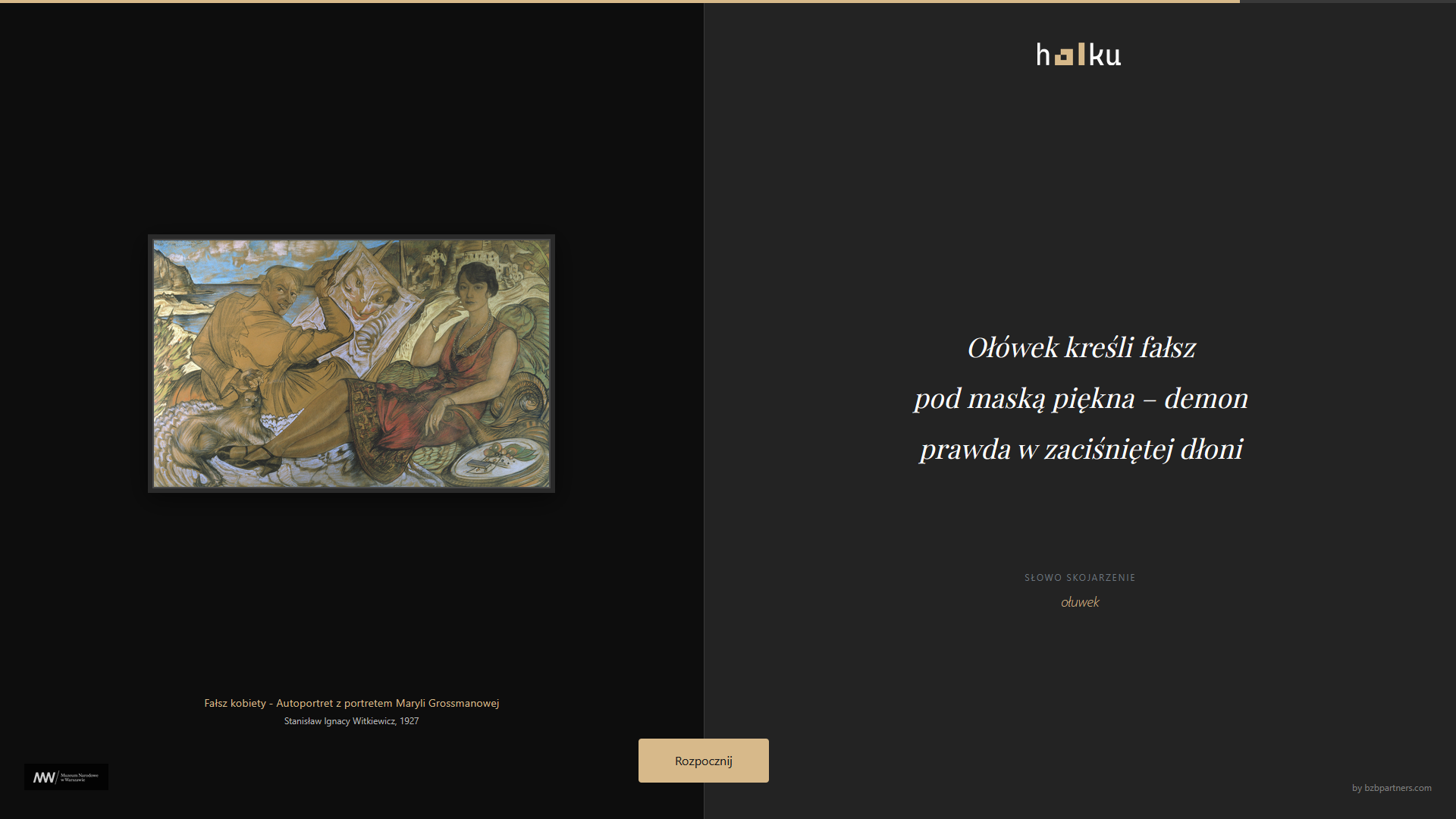
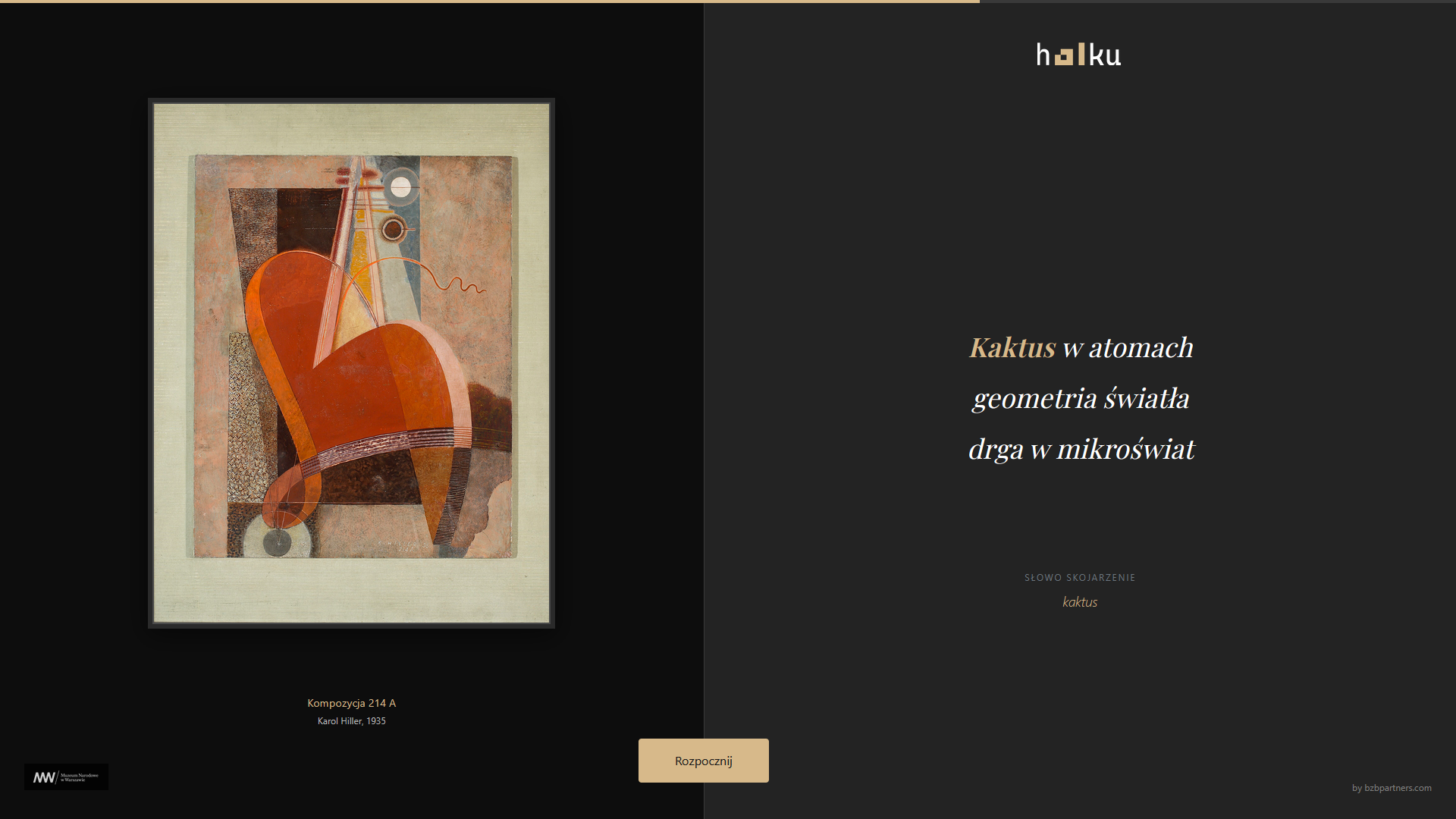
The images show views of the application with digital copies of the works.
The article's title image is a digital copy of Karol Hiller's painting “Composition 214 A” (1935), owned by the National Museum in Warsaw.