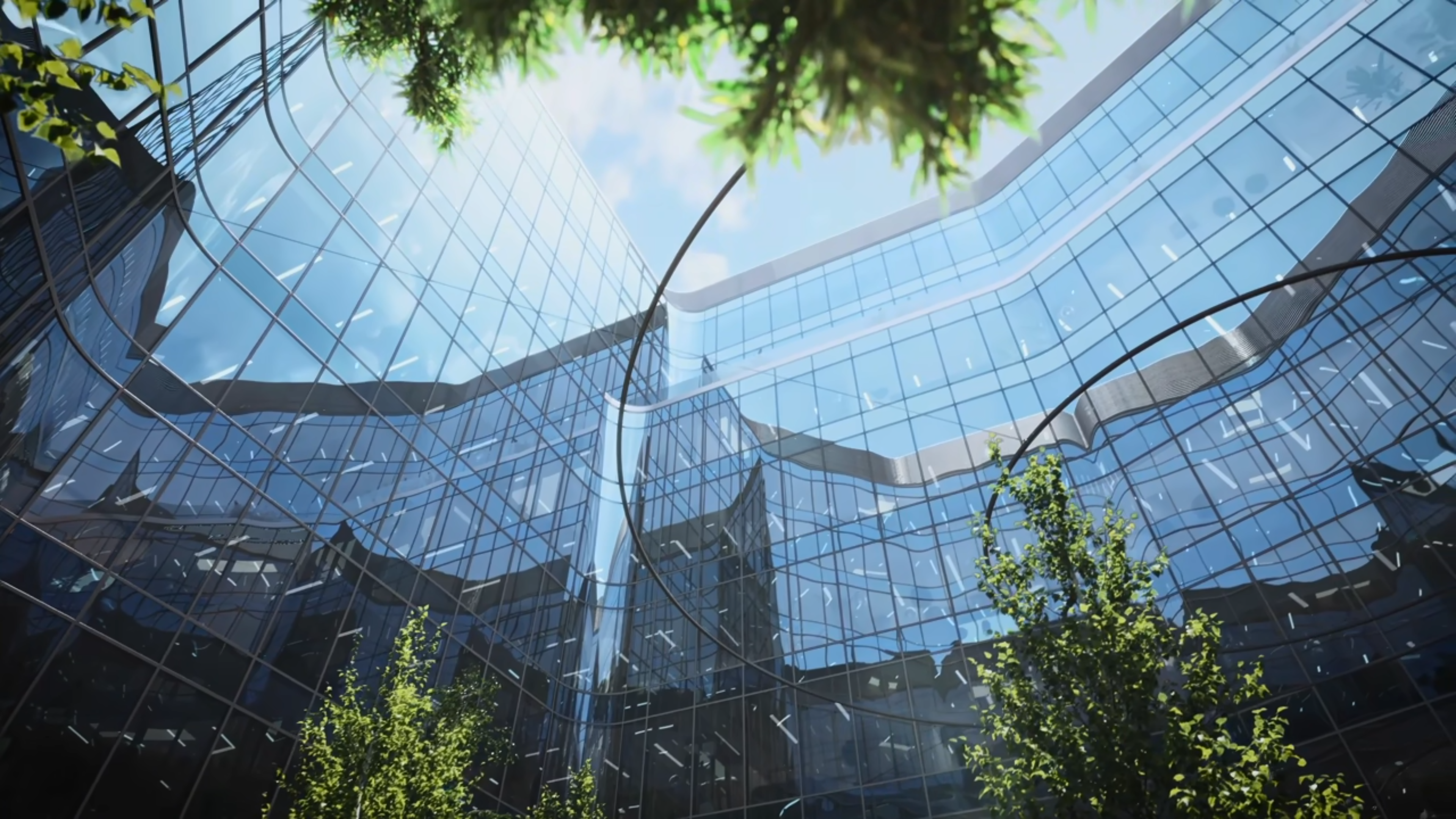
A Class A office building is more than a marble lobby and fast lifts. It is a space that ought to communicate with the people who use it – to welcome, to inform, to guide. At The Form in Warsaw we turned the walls into an interface: a multiwall reading environmental data from BMS sensors, dynamic tenant directories by the lifts, and our own CMS, BrightFlow, which makes managing a dozen or more screens simpler than posting a photo on social media.
The Form
The Form is one of the most modern office buildings in the centre of Warsaw.
We were asked to create an application for the building's digital signage system. One that catches the eye, is always up to date, and responds to what is happening in and around the building. A multiwall in the lobby – a wall of screens that welcomes, informs and impresses. And separately – tenant directories along the circulation routes, because in an office building with a dozen or more companies, wayfinding is not a luxury but a necessity.
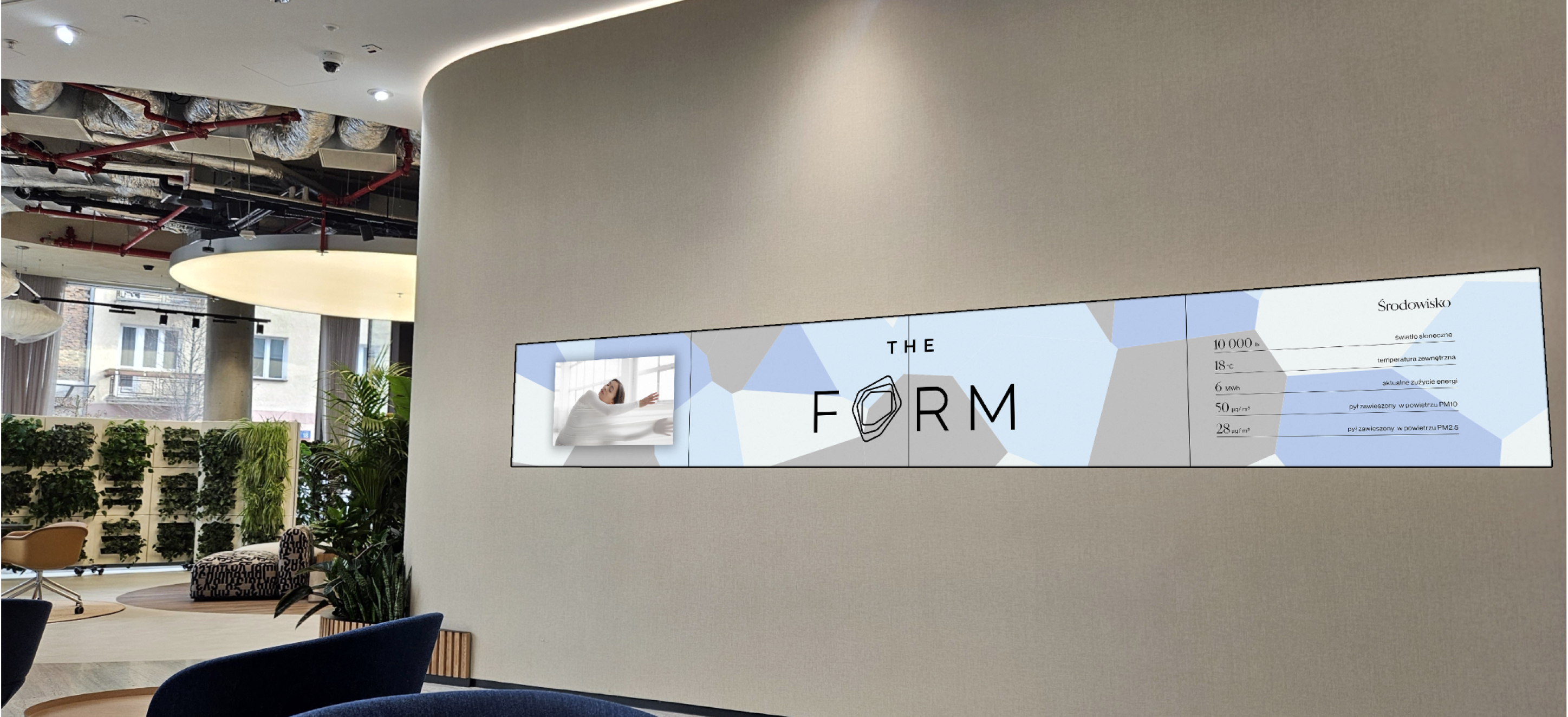
A wall that breathes with the building
The multiwall in The Form's lobby is not a television with a presentation on a loop. It is a system that lives with the building – literally. Once we connected it to the sensors of the BMS (the building management system), the screens began to breathe data: temperature outside and in, air quality, humidity, energy consumption, the status of the HVAC systems. Not as a table for an engineer – as a visualisation that a passer-by grasps intuitively.
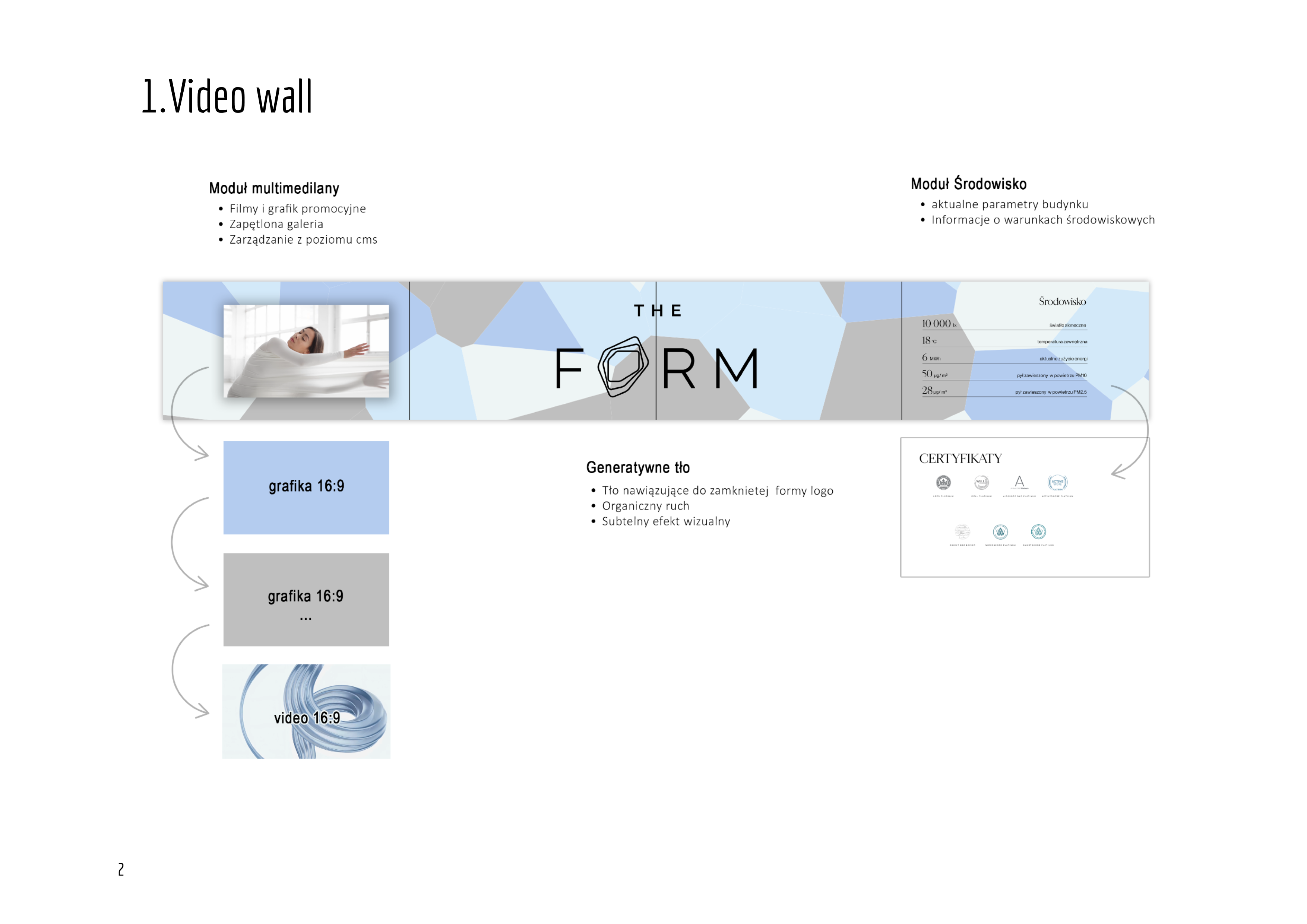
On top of that, an information layer: building news, notices from the property manager, events in the neighbourhood, the weather, the conference room calendar. All of it designed to look like a part of the architecture, not a screen stuck onto it. Typography, colours, the rhythm of the animations – all matched to The Form's visual identity.
The best digital signage application is one that people treat as part of the building. They don't stop to look at it – they look because they are walking past anyway. And they always see something that happens to be meant for them.
Wayfinding without having to ask
Screens with tenant directories were installed along the circulation routes – but not static boards with company names bolted to the wall. Dynamic lists, updated from a phone by the property manager. A new tenant – two taps and it is on the screen. A company moves floors – a swipe of the finger. No calling the service desk, no waiting for a technician, no replacing the perspex.
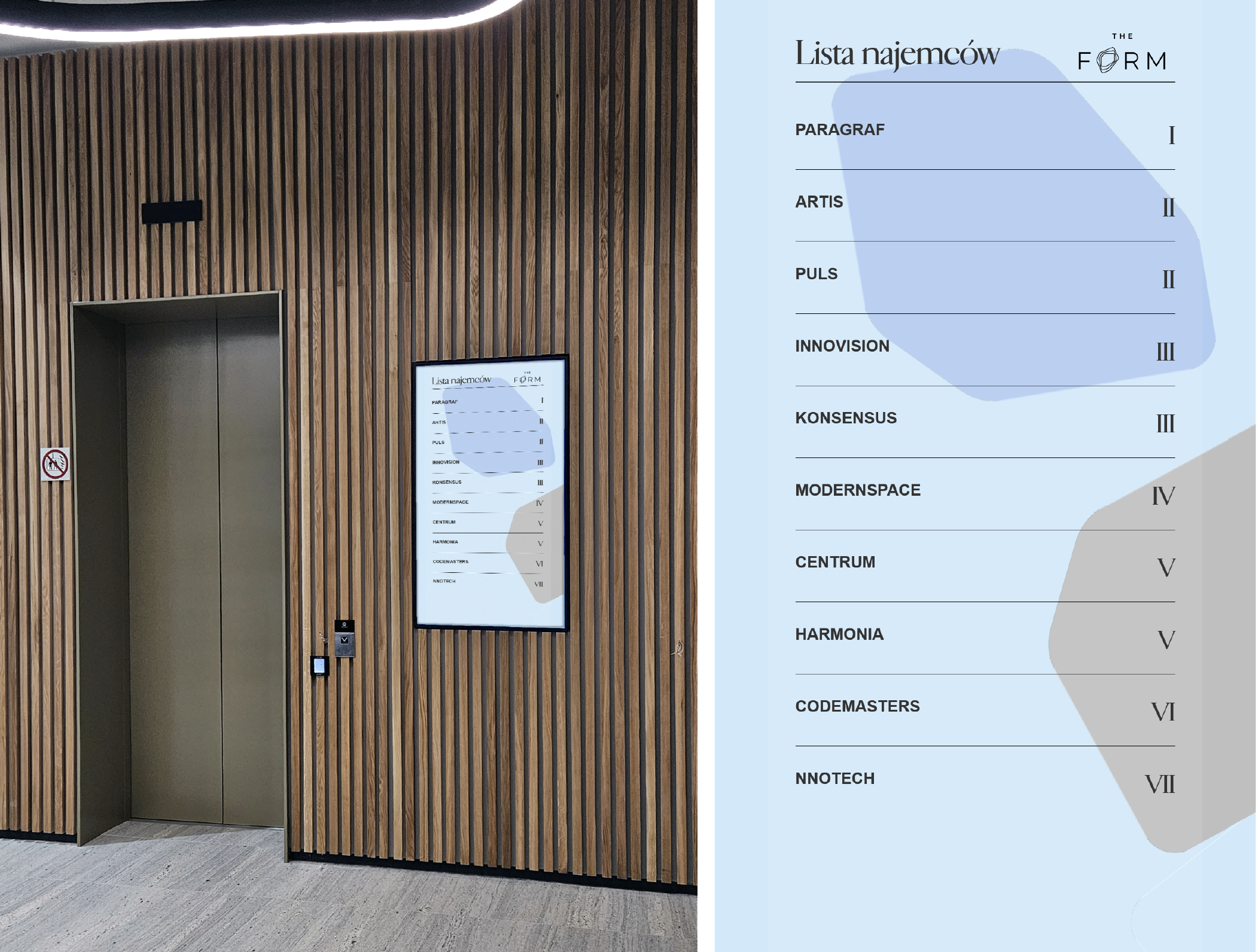
Every screen by the lifts and in the corridors shows what matters at that particular spot. The content changes with the screen's location, but the visual style stays consistent. The building speaks with one voice.
BrightFlow – a friendly CMS
Underneath all of this runs our own content management system – BrightFlow. We built it with one guiding idea: the person managing the content on the screens should not need IT training. If you can post a photo on Instagram – you can use BrightFlow.
BrightFlow is a platform dedicated to digital signage devices, built on Node.js and designed to run reliably on professional players such as BrightSign.
The management interface? That runs in a browser. On a phone. On the tram on the way to the office. The property manager opens the app, changes the message on the lobby screen, confirms it – and before they step off at their stop, the screen at The Form is already showing the new content.
We designed BrightFlow so that you don't have to think about it. We don't want the client to admire our CMS. We want them to change the content on the screen and get back to their other duties.
Node.js, BrightSign, and why it matters
The choice of technology in digital signage is a decision that comes back to haunt you months later. Cheap Android hardware? It works – for six months, then it starts to freeze, overheat and drop off the network. An industrial PC? It works, but it costs as much as a small car and needs on-site IT support.
BrightSign devices are the golden mean – computers designed for one task alone: playing content on screens. An operating system that does not update itself at the worst possible moment. No fans to clog up. No keyboard for someone to press the wrong key on by accident. And BrightFlow, our Node.js-based CMS, talks to them natively – fast, stable, with no intermediaries.
For The Form this means one thing: the certainty that the screens work. Every day, without failures, without interventions, without surprise updates in the small hours.
The building as interface
For us, The Form is an example of where commercial architecture is heading. The building stops being a box with lifts and air conditioning – it becomes a place that communicates with the people who use it. The screens in the lobby are not decoration – they are the information layer of the architecture, as essential as the lighting or the acoustics.
BMS data that until now lived in plant rooms and on the facility manager's monitors suddenly becomes part of the experience of the building. A visitor knows that the air is clean, that energy consumption is falling, that the building cares about the environment. Not an ESG report in a PDF – information that greets them in the lobby every morning.
Digital signage in an office building is not marketing. It is communication. And the best communication is the kind you don't have to look for – because it is exactly where you are already looking.