The Turk's House (Dom Turka) on 3 Maja Street in Augustów remembers more than any of us would wish. A confectioner's shop, the headquarters of the NKVD, a torture house of the Security Office (UB) – and, since 12 July 2025, the Augustów Roundup Memorial House (Dom Pamięci Obławy Augustowskiej), a place that gives a voice to the victims of the last mass crime committed against Poles after the Second World War. We were responsible for the exhibition's multimedia and graphic design – more than thirty interactive stations, hundreds of square metres of wall graphics and a system that lets this story grow as memory grows.
The house that remembers
On 3 Maja Street in Augustów, at number 49, stands a building that knows the truth about this town better than anyone alive. Built around 1900, in the interwar years it housed the confectionery of Kiamil Takosz – a Bosnian confectioner whom the townspeople called the Turk. Hence the name – the Turk's House (Dom Turka) – which outlasted everything that came afterwards. And what came was the worst: in 1940–1941 the Turk's House became the headquarters and prison of the NKVD. After the war – a torture house of the Security Office (UB). In the cellars, on the walls of the cells, archaeologists uncovered calendars, crosses, names and dates scratched by prisoners. And one inscription: “God, save me”.
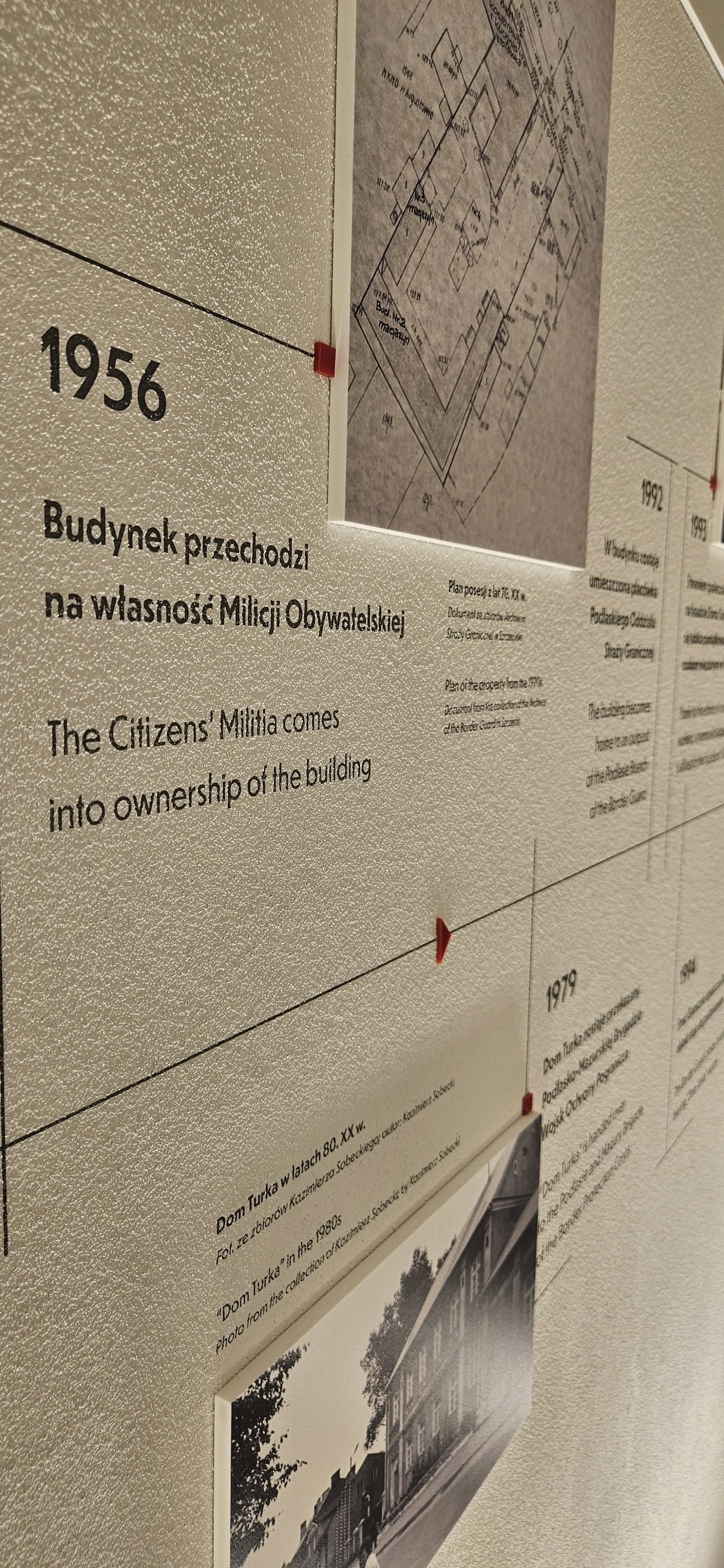
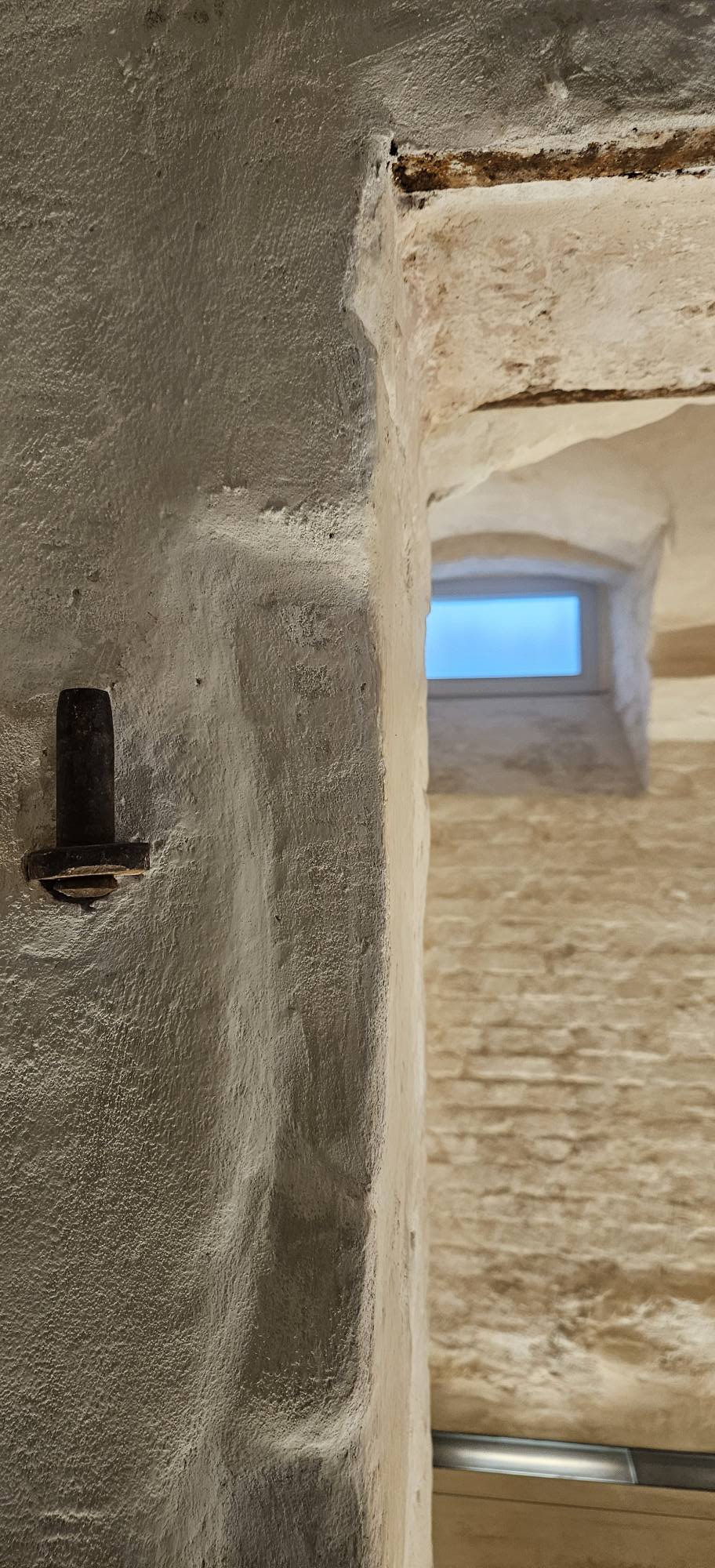
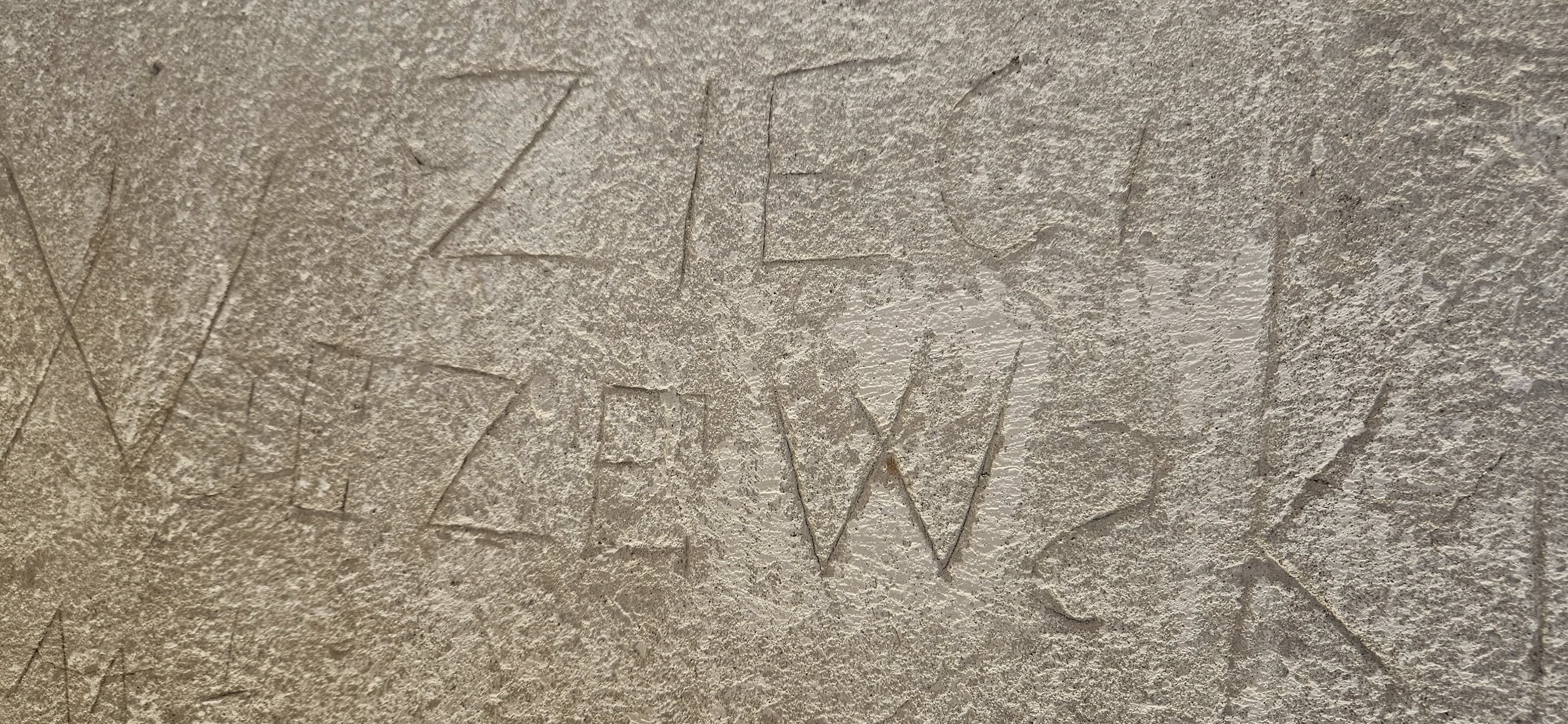
When we were invited to create the multimedia and graphic design for the permanent exhibition in this building, we knew it would be a different kind of work. This was not about the “wow” effect. It was not about anyone saying “what cool multimedia”. It was about giving a voice back to people who had it taken from them eighty years ago.
A roundup that must not be forgotten
The Augustów Roundup (Obława Augustowska) was the last mass crime committed against Poles in Europe after the Second World War. Between 12 and 28 July 1945 – two months after Germany's capitulation – the Soviet 50th Army, together with the NKVD, SMERSH and the Polish Security Office (UB), carried out a pacification operation in the forests around Augustów and Suwałki. At least 592 people were arrested, interrogated and murdered – soldiers of the independence underground, members of the Home Army, but also ordinary residents whose only crime was that someone had informed on them.
To this day the victims' burial site has not been found. Russia refuses to cooperate with the investigation. For eighty years the families have been searching for the graves of their loved ones. The Augustów Roundup is called the Little Katyń – not because it was any smaller in the scale of its cruelty, but because for decades it was even more thoroughly forgotten.
There are exhibitions where you measure success by the number of interactions on a touchscreen. And there are those where success is the silence in the room. This exhibition belongs to the second kind.
Thirty stations, one story
The exhibition “For You, Poland. A Story from the Heart of the Forest” (Tobie Polsko. Opowieść z serca puszczy) occupies the entire building – from the cellars where prisoners really were interrogated, through the ground and first floors, up to the attic with its education zone. Our task was to design and deliver more than thirty multimedia stations, a CMS to manage them, and the complete graphic design of the exhibition – from large-format wall prints, through labels and curatorial texts, to the wayfinding system that leads visitors from one room to the next.
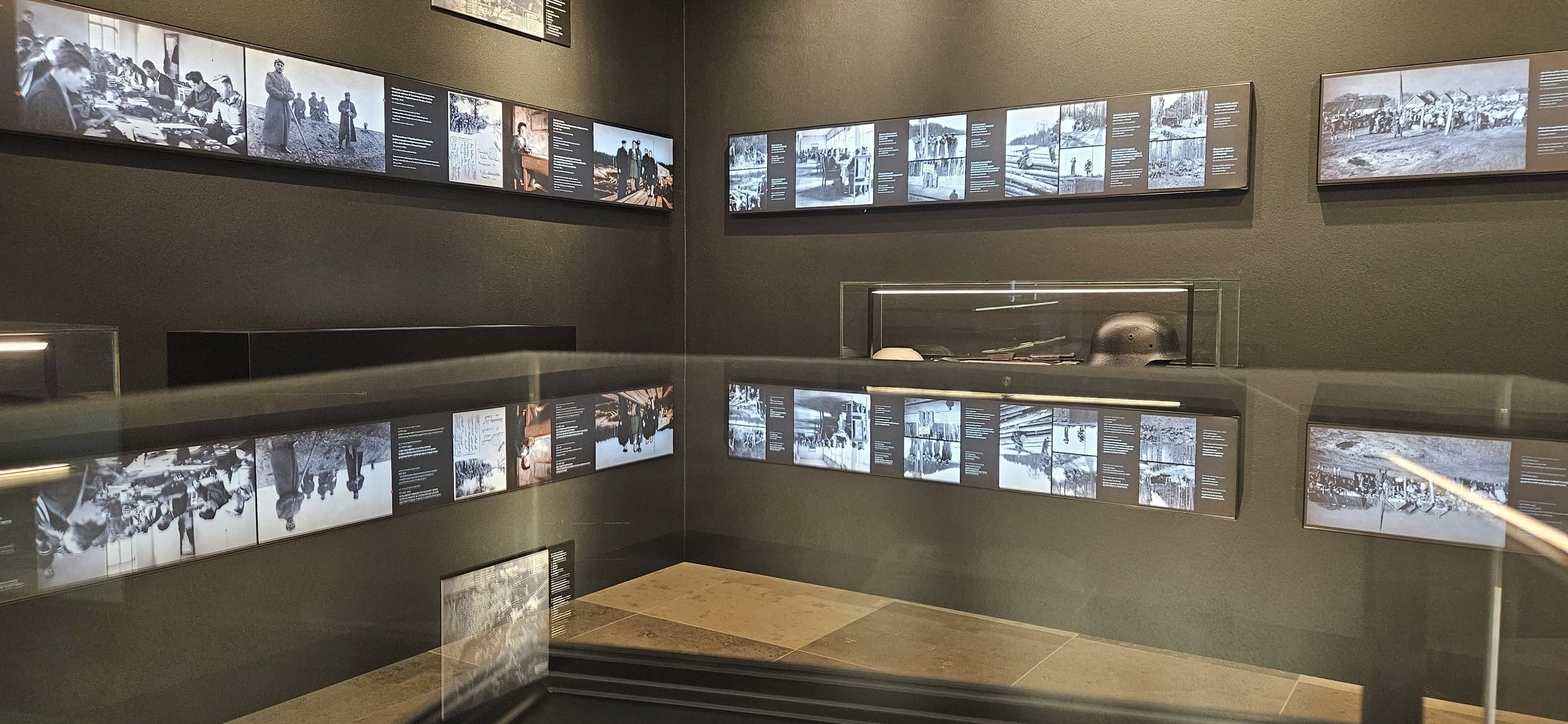
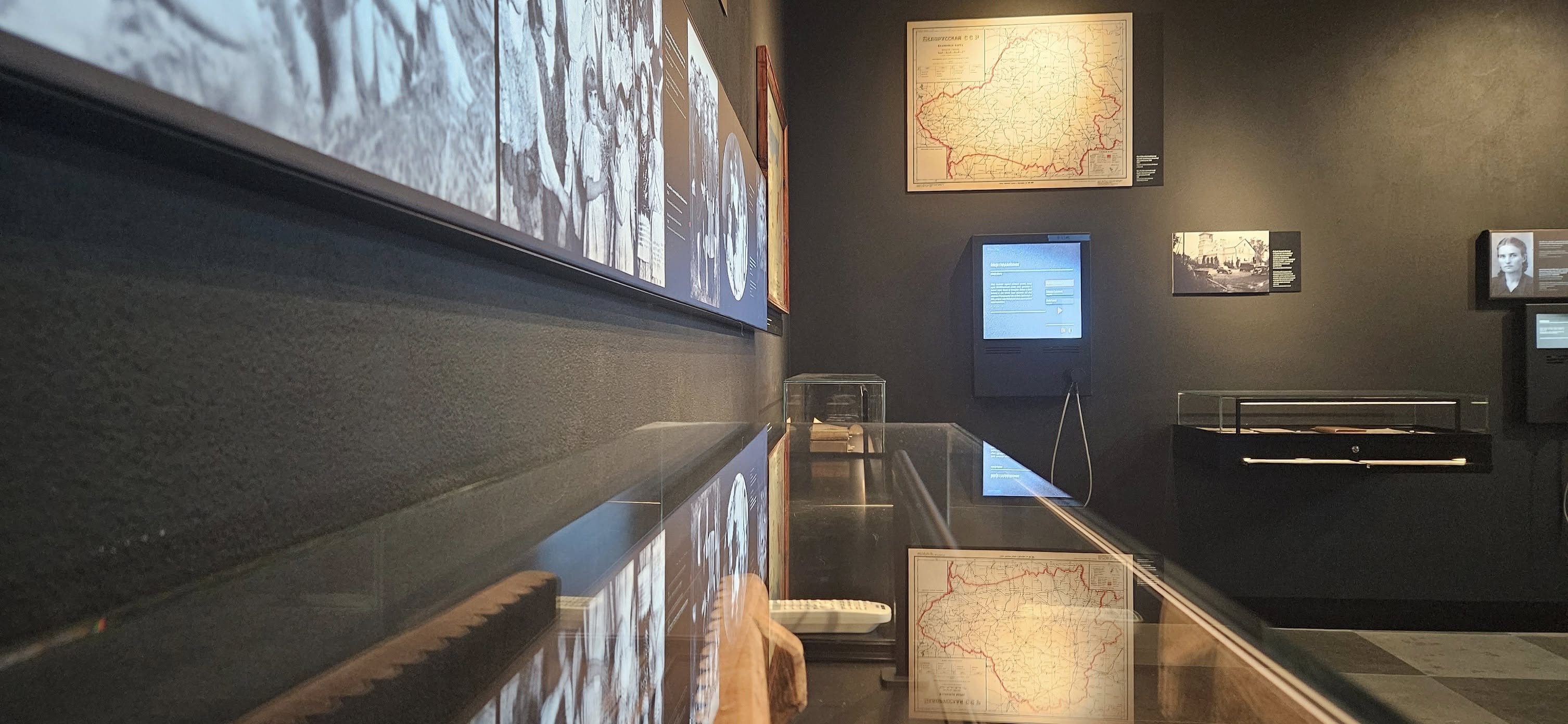
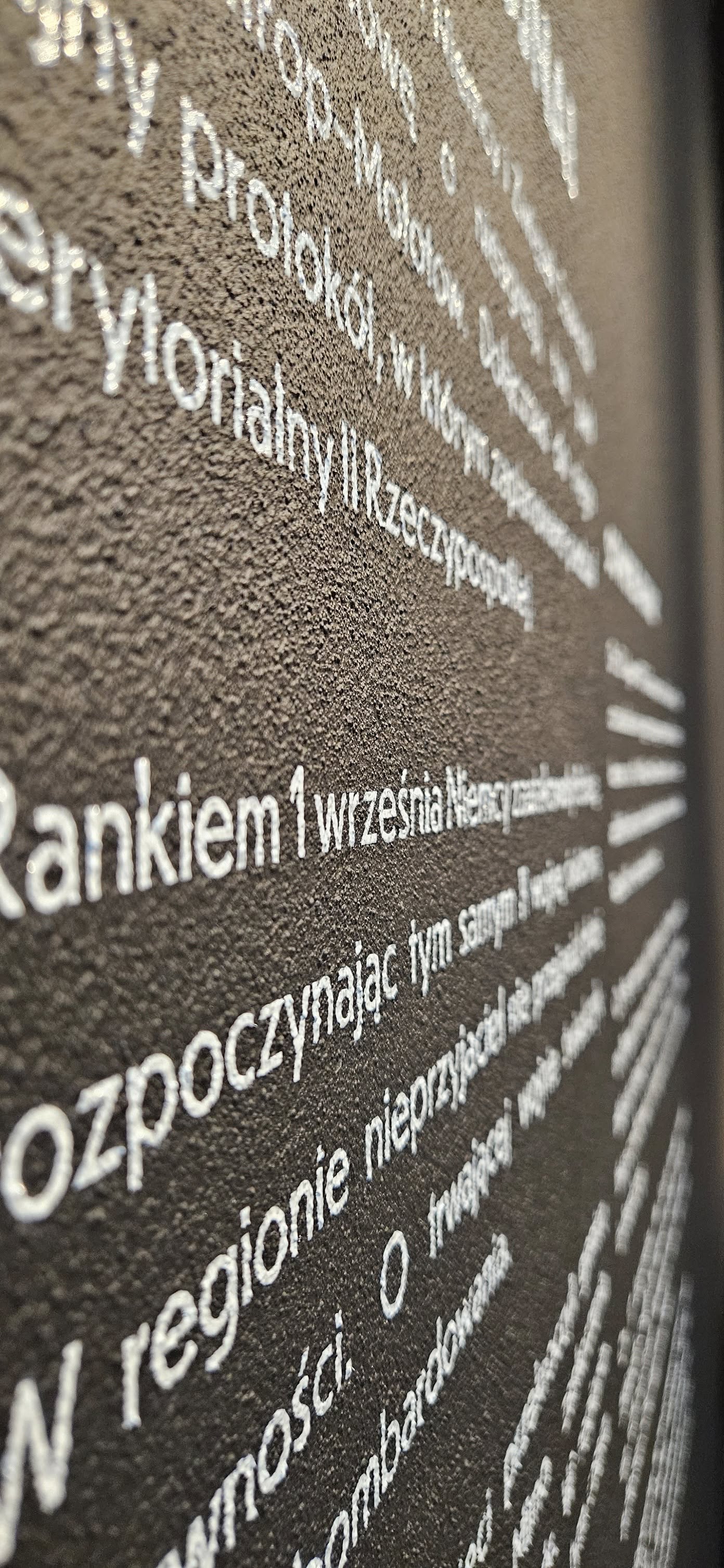
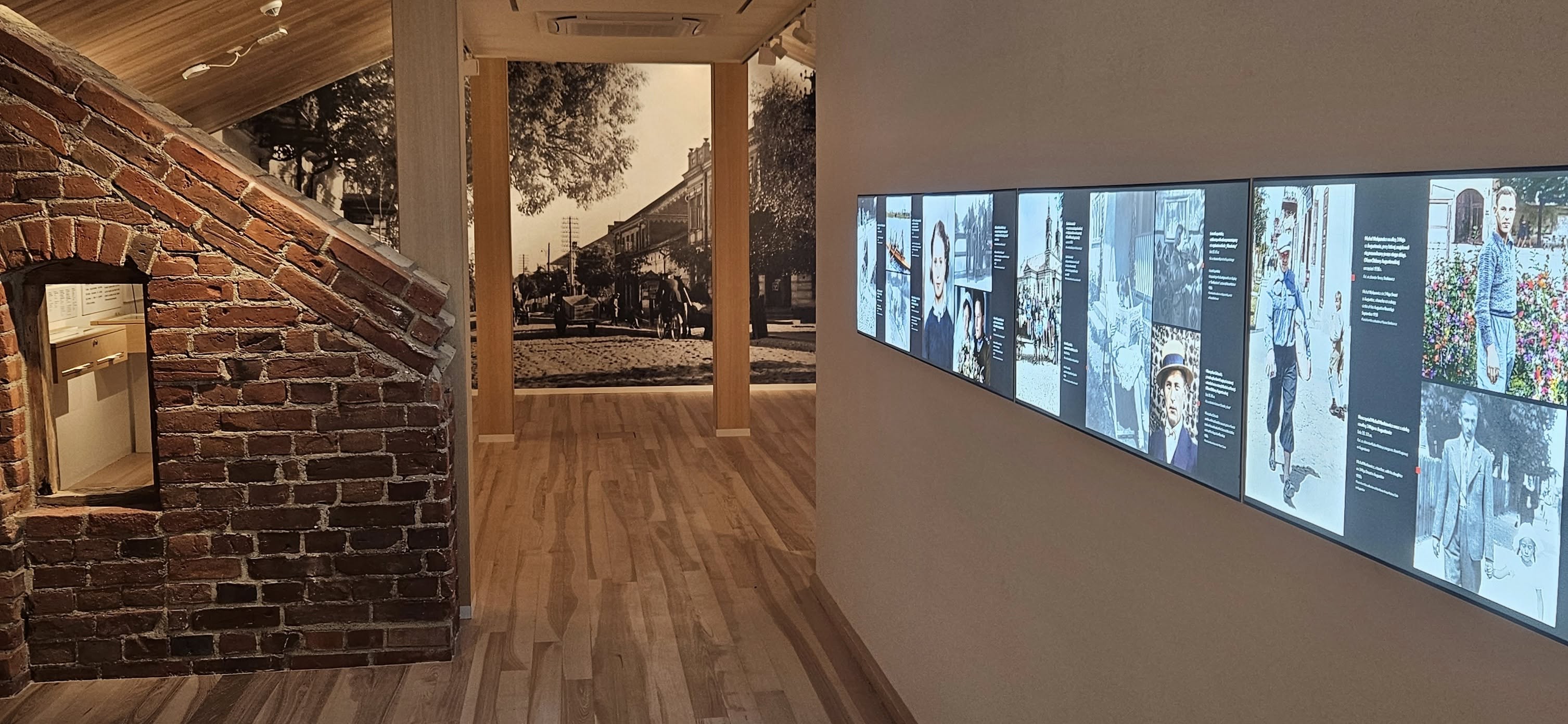
The structure of the exhibition follows the dramatic arc of the story. Five chapters – War, Prelude, Roundup, Memory, and in the attic a pastoral education zone – each demanding a different tone, a different pace, a different form of telling. In the “War” room a projector casts onto the wall a list of 570 names of Siberian deportees and Katyń victims from the region – the names flow slowly, one after another, and cannot be scrolled. In “Prelude” a physical scale model of the Augustów Forest comes alive under the projectors – the interactive map “The Restless Forest” (Niespokojna Puszcza), with thirty story points and a narrator. In the cellar, in the authentic interrogation cells, the witness testimonies are heard through headphones while standing exactly where the witnesses once stood.
The voices that survived
The heart of the exhibition is the witness testimonies. Audio and video recordings of people who lived through the roundup or lost loved ones in it – Alicja Maciejewska, Teresa Jagłowska, Zofia Wysocka, Mirosław Kamiński, Stanisław Wnukowski and many others. Each testimony is a separate station – a touchscreen, headphones, an interface designed to disappear. We did not want anyone to think about the technology. We wanted them to listen.
Film montages, material from the Hoover Institution Archives, the private archives of families – all of it digitally restored and given context, but never over-interpreted. This is not an exhibition that tells visitors what to feel. It is an exhibition that gives them the material and the space to feel it for themselves.
In designing the interfaces for the witness testimonies we adopted a single rule: the technology must be invisible. If a visitor notices that they are using an application, we have designed it badly.
Five hundred and seventy names on a wall
One of the stations that consumed the most time was the database of names. Initially it was to hold 150–200 names and a map with twenty points. As the work progressed, the list grew to 570 names of Siberian deportees and victims, and the map acquired a database of its own: 700 photographs, with a search tool covering 250 biographical entries in two languages. But there was no question of not looking after this data, because every name is a person, and every photograph is a face that someone once loved. Along the way we decided that the station's database must also be capable of expansion and updating, because new material keeps surfacing – new scans, new memories passed on by the families.
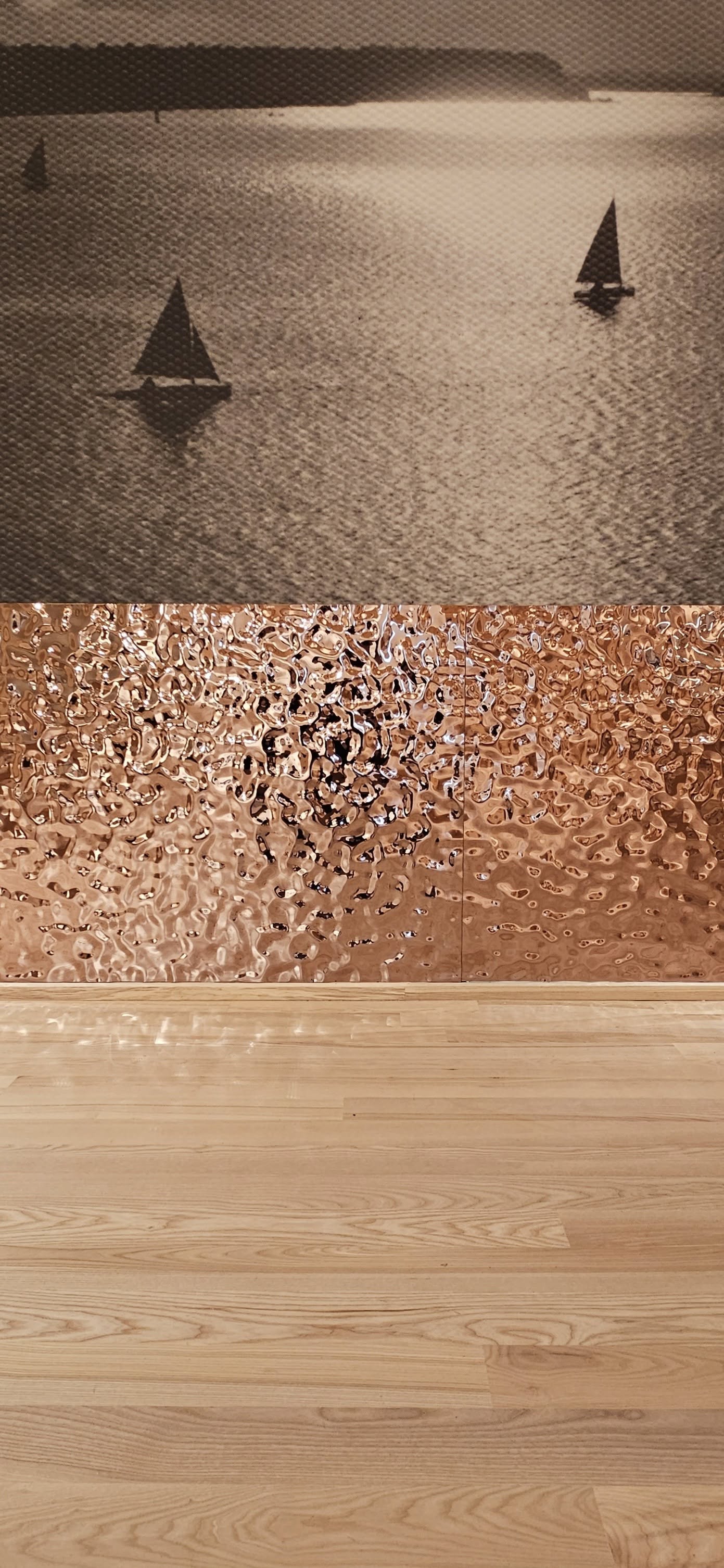
On the walls of the exhibition – large-format prints, photographic collages, restored and colourised photographs of the victims. We designed every graphic from scratch, layer by layer, consulting the curators on every detail – because in this exhibition there is no room for an incidental picture. Every centimetre of wall has to tell the truth.
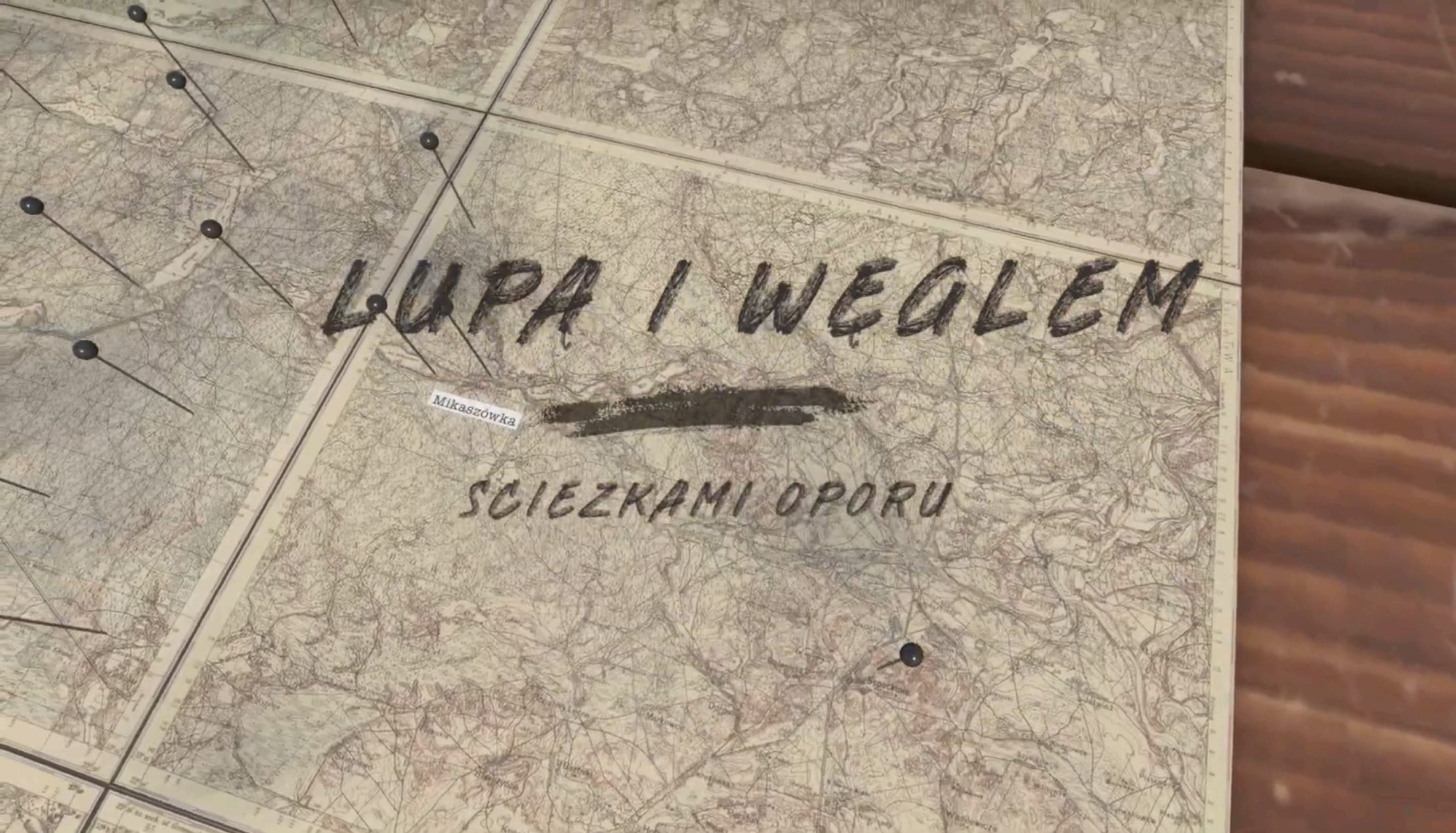
The “Paths of Resistance” station
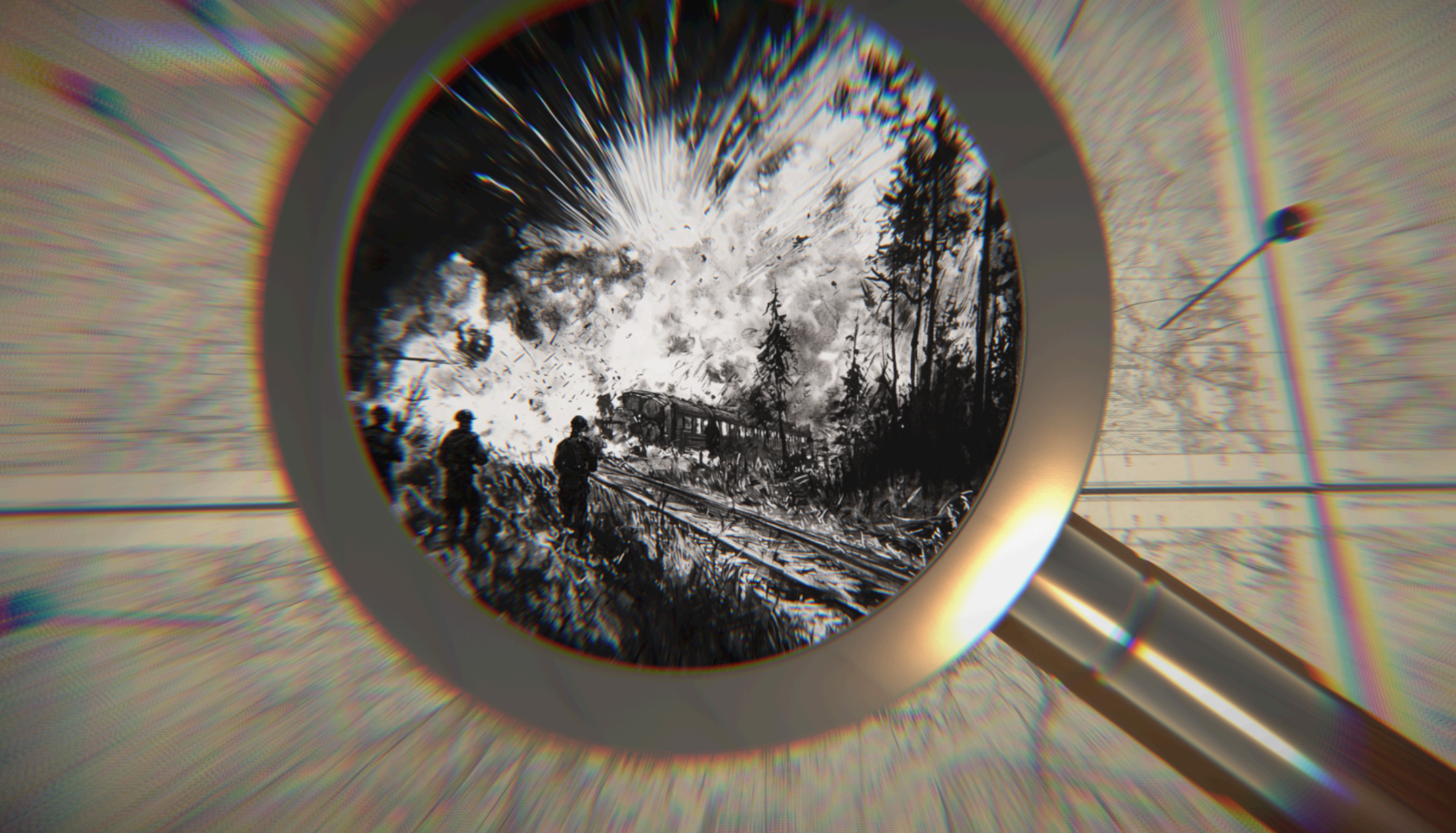
The station we consider the most distinctly our own in the entire exhibition is a two-screen installation with an interactive map of the Augustów Forest. The first screen is a control panel; the second is a large-format map built on a Polish Army map from 1923. On it – like pins on a staff map – the sites of the roundup's individual events are marked. The whole runs on a modern 3D engine working in real time.
The visitor slides a magnifying glass across the control panel, and on the great map the camera follows, closing in on one location after another. At each point a sketch of the event appears – not a photograph, not a render, but a freehand drawing, a sketch. The whole is framed as the recollections of an anonymous officer seated at a staff map – we do not know which side he is on, we do not know whether he is a witness or a participant. We know only that he remembers.
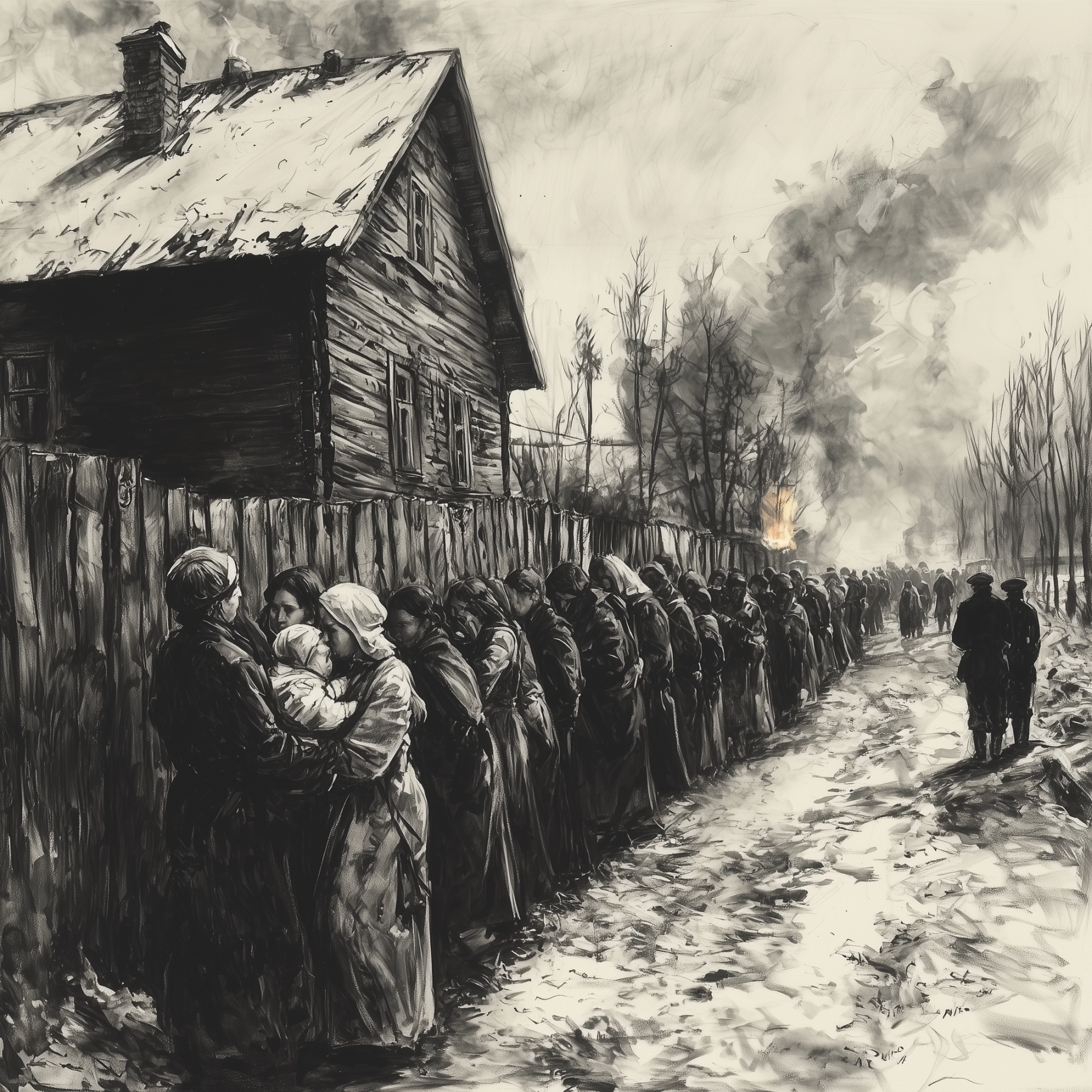
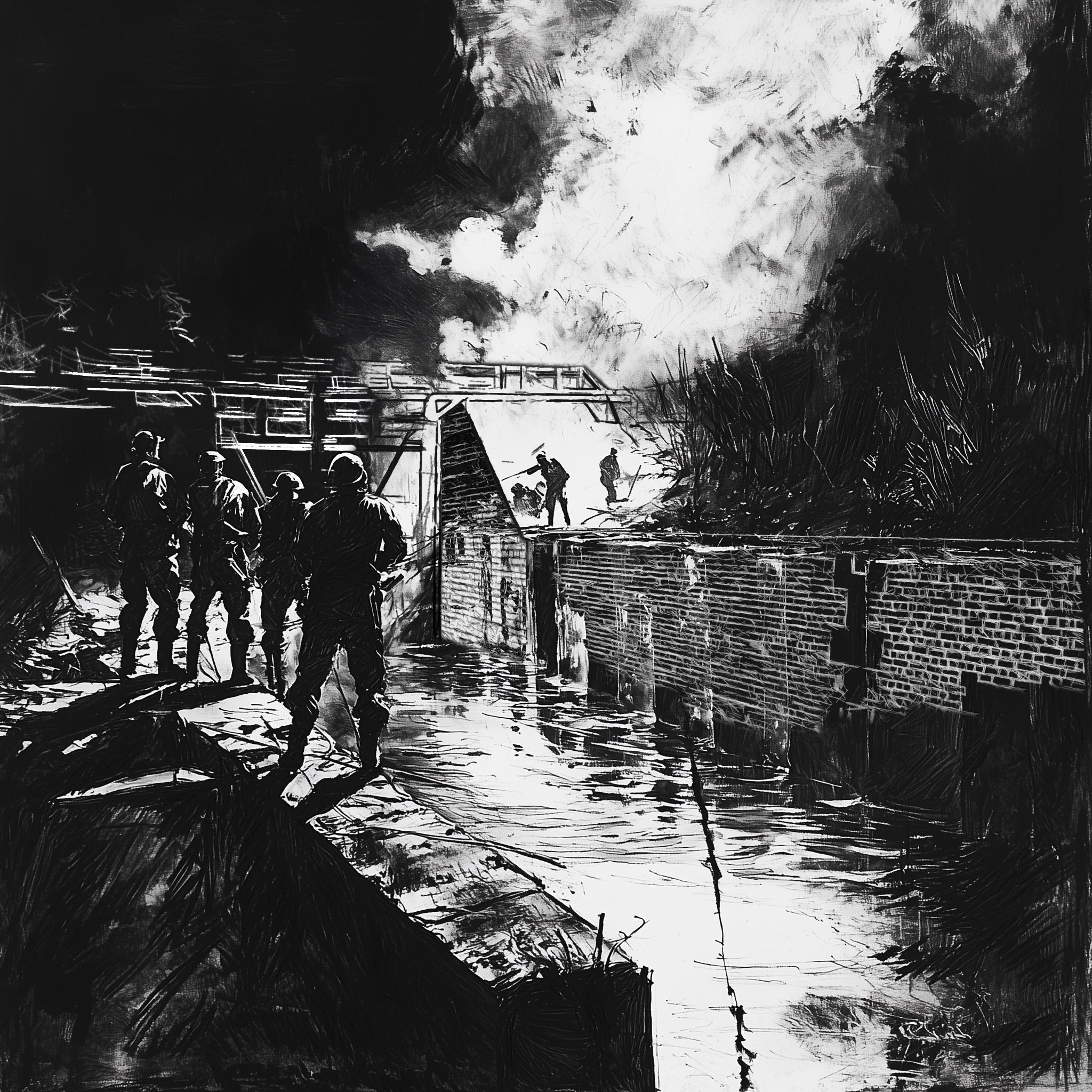
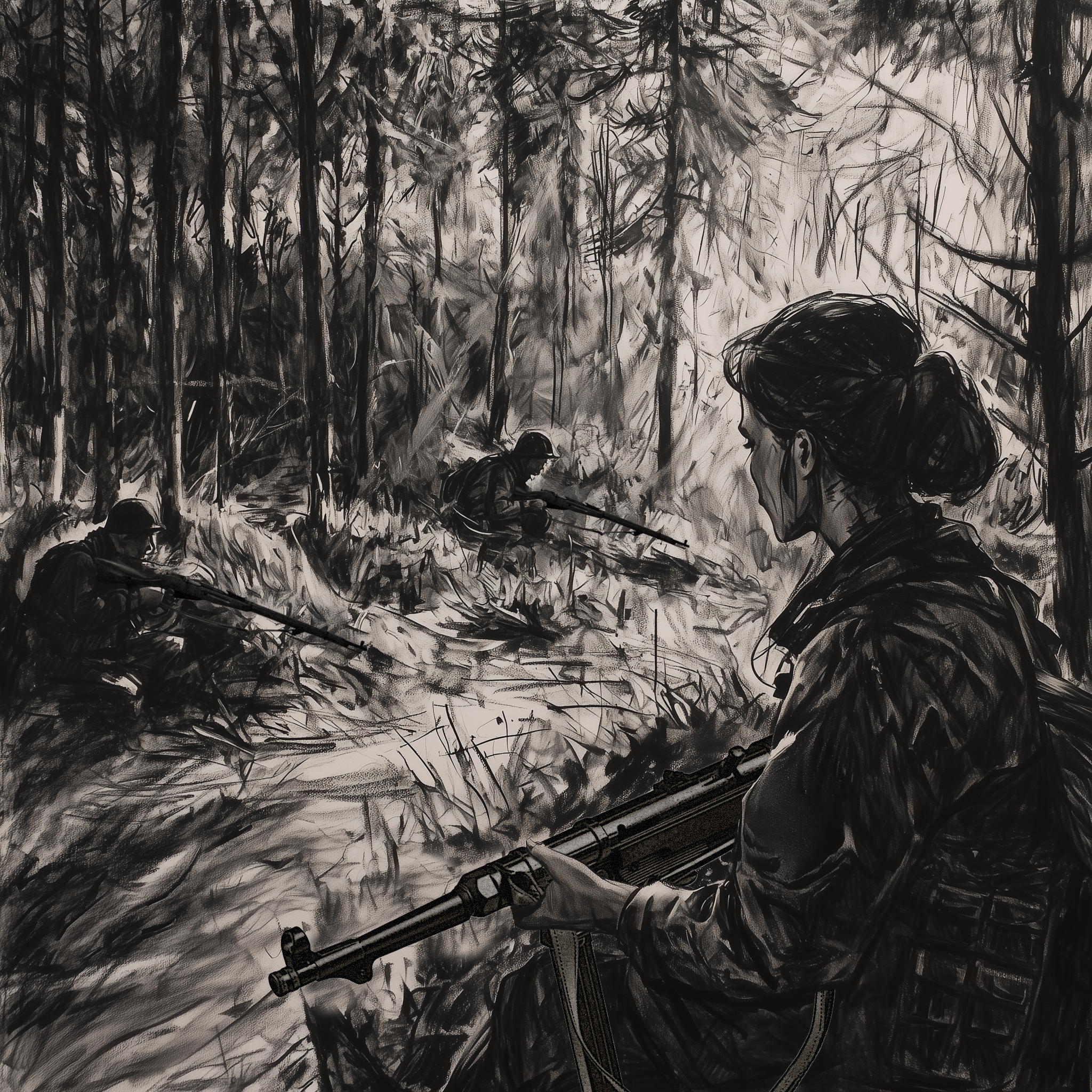
This station matters to us in particular. Not because it was technically demanding – it was – but because it managed to join cartographic precision with the emotion of remembering. The map is exact. The sketches are subjective. Together they create something neither could achieve alone: the sense that this history really happened, in specific places, to specific people.
A tent in the forest
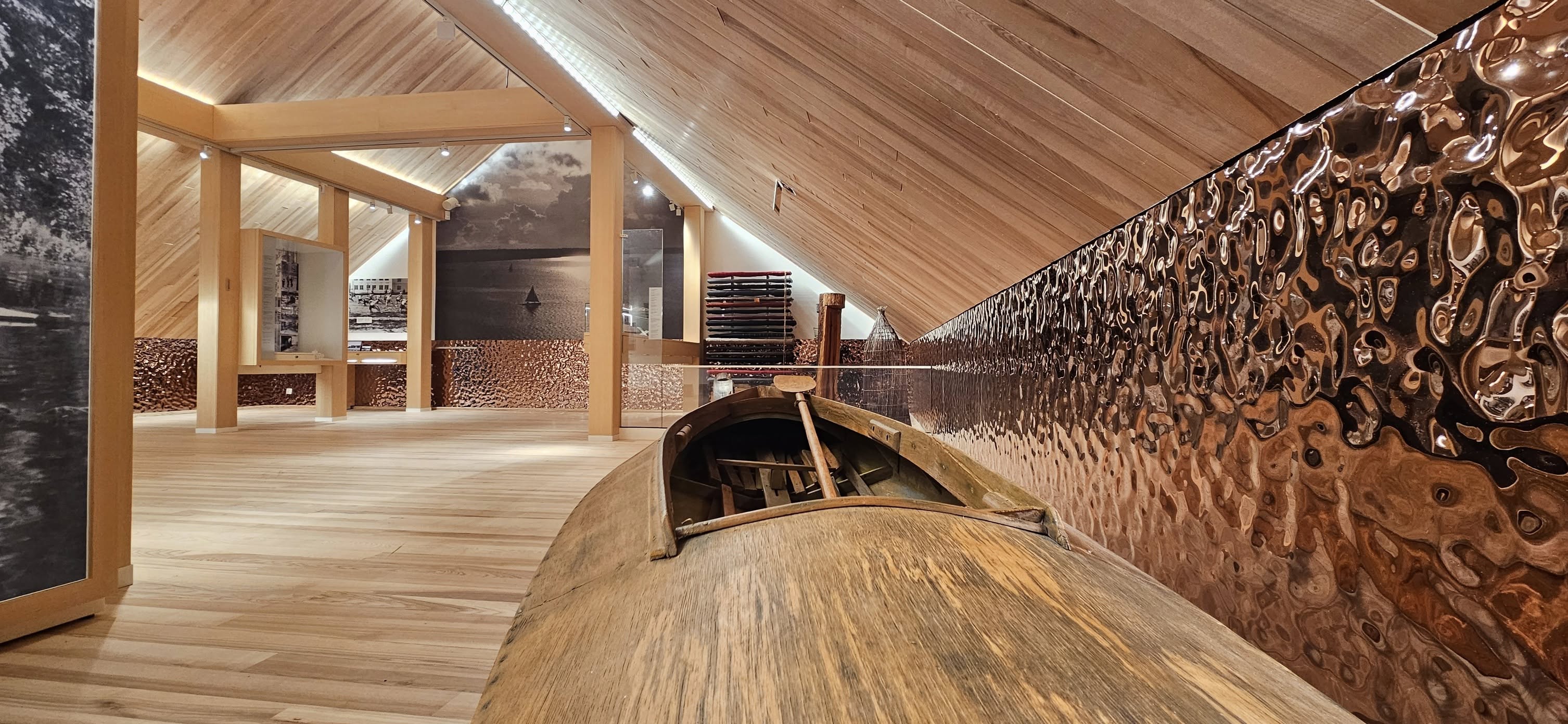
In the attic, in the education zone, we changed the tone. The exhibition is also aimed at young people – and we knew that after an hour in rooms full of testimony to a crime, something different was needed. We designed the zone in the manner of a tent in the forest – with educational games that teach the history of the region without grandiosity, but with respect.
An interactive game of dressing a Krechowce uhlan in his uniform – every detail precisely drawn. An arcade game, “Down the Augustów Canal” – photographing the animals encountered along the way and fishing rubbish out of the water, because ecological and historical education can go hand in hand. At the end – a medal and a word of thanks. And in the background, from directional speakers, come the sounds of the forest: the whisper of grasses, birdsong, the rustle of the woods. A contrast with what awaits one floor below.
From concept to the last label
We worked on this project from concept to installation. The graphic design of every wall, every panel, every label. The scripts for the interactive applications – from simple testimony players to complex searchable databases. A CMS that lets the curators update content without calling in the programmers. Soundscapes – layers of sound that build the atmosphere in the passages between rooms.
We gave this project more time than any other in our history. Not because it was the most technically difficult – it was, but that is not what set the pace. Every text, every graphic, every second of recording demanded a kind of thought that goes beyond technical competence. The question we asked ourselves every day was not “does this look good?” but “does this tell the story with dignity?”.
On 12 July 2025, the 80th anniversary of the Augustów Roundup, the so-called Turk's House opened its doors once more. The architectural practice Tremend gave it a new body. We did our best to give it back its memory.